Retinol and Sunscreen
The non-negotiable half of a retinol routine, and the half most people quietly skip. Why retinoids raise sun sensitivity, how much sunscreen actually counts as a dose, and why skipping it undoes the treatment.
How this is funded: we earn a commission if you buy through our links, at no extra cost to you. It never changes which product we recommend, and we’ll tell you when we’d skip one. Full disclosure.
Every retinol page ends with “and wear sunscreen”, delivered with the energy of a legal disclaimer, and consequently most people read straight past it. So this page treats it as the subject rather than the footnote — because a retinoid without daily sun protection is close to a waste of money, and that is a stronger claim than the usual throwaway line implies.
The argument in three sentences
Retinol is a photoaging treatment. Photoaging is caused by ultraviolet exposure. Treating photoaging while continuing to accumulate it means the treatment is spending its effort offsetting the ongoing damage rather than improving on where you started.
On top of that, retinoids increase sun sensitivity in the short term: accelerated turnover means a thinner outermost layer of dead cells, which is part of what shields living skin from UV. So you have an ingredient that makes you burn more easily, treating a condition caused by burning. The conclusion writes itself.
How much sunscreen is actually a dose
This is the part almost nobody gets right, and it is the difference between the protection on the label and the protection on your face. SPF is established at a specific application density. Apply half as much and you do not get half the SPF — you get considerably less than half.
Dermatology guidance is usefully concrete. About an ounce — a shot glass — for all exposed skin. For the face specifically, at least a teaspoon, which is roughly the amount that runs the length of your index and middle fingers laid out together. If you have been using a pea-sized amount because that is what you use for everything else, you have been getting a fraction of the number on the bottle.
The areas people miss
Dermatology guidance on common sunscreen mistakes keeps naming the same places: ears, the sides and back of the neck, the front of the throat, the chest, and the backs of the hands. These are also, not coincidentally, the areas most likely to be treated with a retinoid at night by someone extending their routine downward. Treating the neck and chest with a retinol while sunscreening only the face is the specific error to avoid — our neck and chest page covers it.
What to look for on the label
- Broad spectrum. The SPF number describes UVB protection. UVA is what drives much of the photoaging a retinoid is treating, and only a broad-spectrum product is tested for it.
- SPF 30 or higher.The standard recommendation, and the point where the incremental returns start to flatten — though a higher number gives more margin for the under-application everyone is guilty of.
- Water resistant if you will be swimming or sweating, and reapplied after either regardless of the claim.
- A texture you will actually use daily. This is the single most underrated specification. The best sunscreen is the one that gets applied every morning in a proper quantity, and a formula you dislike loses to one you do not.
If your skin is currently in the flaky phase of retinoid adjustment, a more emollient or cream-textured sunscreen sits better than an alcohol-heavy fluid, which can sting on a compromised barrier. Mineral formulas with zinc oxide or titanium dioxide tend to be best tolerated by reactive skin.
Two sunscreens that suit a retinol routine
Both are cheap enough to replace before they run out, which matters more here than any refinement — a sunscreen you ration is a sunscreen you under-apply.
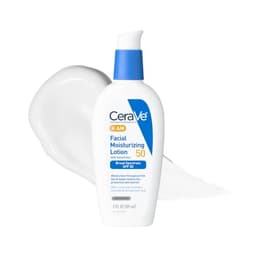
Morning SPF
CeraVe AM Facial Moisturizing Lotion SPF 50, 3 oz
The morning half of a retinol routine, in one step: the moisturizer and the SPF 50 are the same bottle, which is the version people actually keep using. Retinol treats photoaging — without daily sun protection it spends its effort offsetting damage you are still accumulating.
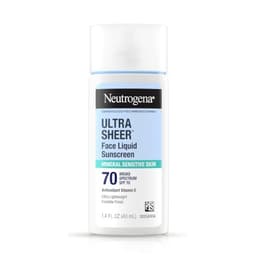
SPF for retinized skin
Neutrogena Ultra Sheer Liquid Mineral Face Sunscreen SPF 70, 1.4 fl oz
A mineral face sunscreen, per the listing — the format that tends to be tolerated best while skin is in the flaky, stinging phase of retinoid adjustment, where an alcohol-heavy fluid is the one that makes you skip a morning.
Price as of September 25, 2026. #ad How we’re funded
None of these are retinols — they are the supporting products this page already recommends, listed so you can act on the advice. Product images supplied by Amazon; prices are live and dated on each button.
Timing and layering
Sunscreen goes on last in the morning routine, after moisturizer, before makeup. Retinol goes on at night and does not interact with your sunscreen at all — they never share a routine. If you want a morning active as well, vitamin C is the conventional pairing; our retinol vs vitamin C page covers the split.
Reapplication is where realism helps. Outdoors, every two hours and after swimming or heavy sweating. Indoors on an ordinary working day, one good morning application in the right quantity is a defensible baseline — and getting that one application right matters more than an aspirational reapplication schedule you will not keep.
The summer break question
People are frequently told to stop retinol in summer. The underlying concern is real — more sun exposure, more sensitivity — but the advice mostly works as a proxy for “most people are worse at sun protection in summer”. If your protection is genuinely consistent, there is no need to stop, and stopping means repeating the adjustment period every year.
Where a pause does make sense: a beach holiday, a week of skiing, or any period where heavy direct exposure is unavoidable. Stop a few days before, restart a few days after at a slightly reduced frequency, and do not resume on sunburned skin. Our safety guide covers the other situations where pausing is the right call.
Sunscreen is also the anti-aging product
It is worth saying plainly on a site that sells retinol: if you could only have one product, the sunscreen is the one with the better claim. It prevents the damage a retinoid spends months partially undoing. The most sensible way to think about the pair is that the sunscreen protects the investment you are making at night — which is also why the two appear together in every serious piece of guidance on this subject.
General guidance, not medical advice. Retinol Room is written by an enthusiast, not a dermatologist. For a diagnosis, a reaction, or a prescription active like tretinoin, see a qualified professional. Introduce any new active slowly and patch-test first.
Frequently asked questions
Do I have to wear sunscreen if I use retinol?
Yes — it's the one instruction in a retinol routine with no reasonable exception. Retinoids increase sun sensitivity, and sun exposure causes the photoaging you're using retinol to address. Skipping sunscreen means paying to repair damage you're simultaneously creating, which is the definition of running to stand still.
How much sunscreen should I use on my face?
About a teaspoon, which is roughly the amount that covers the length of your index and middle fingers. The AAD puts a whole-body dose at about an ounce — a shot glass — for exposed skin. Most people apply far less, and SPF ratings are established at a specific application density, so under-applying gives you substantially less protection than the label says.
Does retinol make you more sensitive to the sun?
Yes. Retinoids accelerate turnover and thin the outermost dead-cell layer, which leaves skin less shielded and more prone to burning. The effect is real but not extreme — it means daily sun protection is required, not that you can't go outside. It's also why retinol belongs in the evening routine rather than the morning one.
Can I use retinol in the summer?
Yes, with the same sun protection you should be using anyway. The seasonal-break advice you'll see repeated is mostly a proxy for 'people are worse at sunscreen in summer'. If your sun protection is genuinely consistent, there's no need to stop — and stopping and restarting means repeating the adjustment period each year.
What SPF should I use with retinol?
Broad-spectrum SPF 30 or higher, water resistant if you'll be sweating or swimming. Broad spectrum matters as much as the number here — UVA drives much of the photoaging retinol is meant to address, and an SPF number alone only describes UVB protection.
Do I need sunscreen indoors?
For most people on an ordinary indoor day, one good morning application is a sensible baseline and reapplication isn't necessary. If you sit beside a large window for hours, UVA does pass through ordinary glass, so it's worth being less casual about it than you would be in a windowless room.
Sources
- American Academy of Dermatology — How to apply sunscreen — AAD on how much sunscreen to use (about a teaspoon for the face) and reapplying every two hours (accessed August 11, 2026)
- American Academy of Dermatology — 5 common sunscreen mistakes and how to avoid them — AAD on under-application, missed areas and skipping sunscreen on cloudy days (accessed August 11, 2026)
- American Academy of Dermatology — How to decode a sunscreen label — AAD on SPF, broad spectrum and water resistance claims (accessed July 17, 2026)
- U.S. FDA — Sunscreen: How to Help Protect Your Skin from the Sun — FDA on SPF numbers, broad-spectrum and application amount (accessed July 17, 2026)
- The use of retinoids in the treatment of photoaging (PubMed) — Clinical-trial evidence for topical retinoids in photoaging (accessed July 17, 2026)
- American Academy of Dermatology — Retinoid or retinol? — AAD on the difference between prescription retinoids and OTC retinol (accessed July 17, 2026)
Keep reading
Is retinol safe?
Normal side effects, the ones that mean stop, and the situations where retinoids are off the table.
Read the guideRetinol for dark spots
Where sun protection stops being a caveat and becomes half the treatment.
Read the guideHow to use retinol
The full nightly routine that this morning routine exists to protect.
Read the guideRetinol for melasma
The condition where light exposure is the driver, not a complication.
Read the guide