Naturium Retinol Body Lotion Review
A shea-butter body lotion with retinol in it, in a category where not one product will tell you how much. What the base is genuinely doing, what the missing number costs you, and why the size on the bottle is the decision that actually changes your result.
How this is funded: we earn a commission if you buy through our links, at no extra cost to you. It never changes which product we recommend, and we’ll tell you when we’d skip one. Full disclosure.
The sensible middle of this category: a shea-butter body lotion with retinol in it, in a size you can actually use on arms and legs, at a price that does not make you ration it. If you want one bottle that moisturizes properly and treats quietly, this is the shape that makes sense.
Strengths
- Shea butter base means it works as a real moisturizer, not just a carrier
- 8 oz is enough to cover arms and legs regularly
- Mid-range price per ounce for a treatment lotion
Trade-offs
- Retinol strength is not published
- Stock has been thinner than the rest of this list — check availability before you plan around it
| Key active | Retinol (+ shea butter) |
|---|---|
| Stated concentration | Not published |
| Format | Rich body lotion |
| Fragrance-free | Not published |
| Best for | Whole-body use where the lotion has to moisturize too |
Formulation note. Retinol in a shea-butter body lotion base, per the listing. The emollient base is the reason it doubles as your moisturizer; the retinol figure is undisclosed, as it is across this whole category.
Ingredients and claims read from the product listing, on August 11, 2026. “Not published” means the brand does not state that figure.
Body retinol is a category built on one uncomfortable fact: the products are sold with the vocabulary of face skincare and bought for a job that is nothing like it. A face serum treats an area the size of your two palms. Arms, legs and chest are a different order of magnitude, and the product that works is the one you are willing to use generously, night after night, for months.
This is the lotion most people land on, and it is the “Best overall” pick of our body retinol roundup. It earns that on shape rather than on any published claim — a shea-butter base that moisturizes properly, a size you can be generous with, and a price that does not punish you for using it. What it does not do, and what nothing else in this category does either, is tell you how much retinol you are applying.
The number nobody publishes
Start here, because it is the thing this site exists to point at. Naturium does not state the retinol concentration in this lotion. Our spec table prints Not published, and that is a finding rather than a gap in our research.
It is worth being precise about how unusual this is not. Face retinol has a handful of brands that print a figure — The Ordinary across a 0.2% / 0.5% / 1% ladder, L’Oreal at 0.3%, Paula’s Choice at 1%. Body retinol has none we could find. Every product on our body roundup, this one included, keeps the figure to itself. So the honest framing is that Naturium is not being less transparent than its competitors; the entire category is opaque, and you are choosing between unknowns.
What that costs you is concrete. You cannot place this product on the ladder in our strength guide. You cannot tell whether stepping to it from a face retinol is a step up or down. And you cannot reason about why a given frequency is or is not working, because one of the two variables is hidden. The practical consequence is that you ramp up by feel rather than by plan — which is workable, but it is a worse position than the one a stated figure would put you in.
What the shea butter is actually doing
The base is not decoration here, and it is the strongest thing about the product. Body skin is generally drier than facial skin, has fewer oil glands over most of its area, and gets washed with hotter water more often. A retinoid increases water loss through the skin barrier while it works, which is precisely the wrong thing to do to skin that is already lipid-poor.
An emollient base offsets some of that. Shea butter is an emollient rather than a humectant — it sits in the barrier and softens rather than pulling water in — which is the appropriate class of ingredient for dry limbs, and the AAD’s standard dry-skin advice is a cream or ointment applied to skin that is still damp. In practice that makes this a lotion you can apply after a shower and treat as your moisturizer, rather than a treatment you have to layer something else on top of.
That matters more than it sounds. The most common reason a body retinoid fails is not that the dose was too low; it is that the routine had too many steps for a body-sized area and got abandoned by week three. A treatment that is also your moisturizer removes the step people skip.
The size decision, which matters more than the formula
Naturium sells this lotion in two sizes: the standard 8 oz and a 14 oz Jumbo. In this category that is not a trivial choice, and it is the question people actually search for.
Work backwards from the area. If you are treating a chest and the backs of your hands, 8 oz is a sensible run and you will finish it while it is fresh. If you are treating both arms and both legs, 8 oz is the size that quietly turns into rationing — a thin, unhappy layer spread to make the bottle last, on a treatment that does nothing at all where you did not put it. The 14 oz is the honest buy for that reader, and both sizes carry a live price on this page so you can do the per-ounce arithmetic yourself at the moment you are deciding.
There is a real counterweight, and we would rather state it than sell you the bigger bottle unopposed. Retinol degrades once a container is opened and exposed to air and light, so a bottle that takes eight months to finish spends eight months getting weaker. Buy the size that matches the area you will genuinely treat, not the size that looks like better value on a spreadsheet — our shelf-life guide covers the packaging hierarchy and the signs a product has turned.
One listing detail we will report but not over-read: the 14 oz title names encapsulated retinol where the 8 oz title names shea butter only. That is a difference between two pieces of listing copy. It is not documentation that the formulas differ, and we are not going to present it as though it were. If encapsulation is what you are shopping for, our encapsulated retinol roundup covers products where the claim is central rather than incidental.
What it is realistically for
Crepey, photoaged texture on the forearms, chest and knees. That is the concern topical retinoids have the deepest published trial evidence for, and it is the job this product is shaped around. Our crepey skin pagesets out what changes and over what timescale — texture and tone over three to six months, and no change at all to genuine laxity.
Be clear-eyed about the ceiling, though. The published photoaging evidence is overwhelmingly from facial studies using known concentrations, frequently prescription-strength. Applying an undisclosed cosmetic dose to a forearm is a reasonable extrapolation, not a tested one, and it deserves proportionally more modest expectations. Expect gradual smoothing, not a transformation, and judge it at three months rather than three weeks.
For the neck and chest specifically, treat those as their own project. The skin there is thinner, sees more sun and reacts sooner than a forearm does — our neck and chest roundup starts people at one night a week there for exactly that reason.
Who it suits
Anyone who wants one bottle that moisturizes their body properly and treats it quietly. The emollient base means it earns its place in the routine even on the nights the retinol is not the point, and that is the single best predictor of whether a body treatment survives past month one.
It also suits dry skin better than the lighter, fast-absorbing body retinols do, and it suits people stepping into body retinoids for the first time, where a cushioned base and a modest, unstated dose is a forgiving place to start.
If price is the deciding factor rather than texture, the honest comparison is the supermarket option: our Gold Bond Age Renew review covers a lotion at under half this price whose brand publishes its entire ingredient list — niacinamide seventh, plus a peptide and a ceramide — and states it is fragrance-free and cleared for facial use. It is a thinner, less emollient finish, which is the trade.
Who should skip it
Anyone whose main criterion is a published strength. If not knowing the number bothers you — and it is a legitimate thing to be bothered by — no body lotion on our list will satisfy you, and the honest move is to buy a stated-strength face retinol and accept that you are treating a smaller area properly rather than a larger area blindly.
Skip it too if you want the lightest possible finish; a shea-butter lotion is a richer texture than the fast-absorbing drugstore body retinols, which is the point but is not everyone’s preference. And skip it if the target is body breakouts rather than texture, where a formula built for congestion is the better tool.
How to use it
At night, on clean and completely dry skin, two nights a week to start. Apply it generously — the failure mode in this category is under-application, not over-application — and add nights only once the skin you are treating stays comfortable, using the schedule in our frequency guide.
Introduce one area at a time. Arms first, then legs, then the chest weeks later on its own slower ramp. Keep exfoliating acids off the same nights while you adjust, per our layering guide, and keep the bottle closed and out of a hot, sunlit bathroom. Sunscreen the next morning on anything you treated and will expose — forearms, hands and chest included, which are precisely the areas people leave out.
The verdict
The most sensible default in a category with no good data. The shea-butter base does real work, the sizing lets you treat a body-sized area without rationing, and the product is pleasant enough to keep using — which, over a six-month timescale, matters more than any formulation detail you could argue about.
What we cannot tell you is how strong it is, because Naturium will not say, and neither will anyone else selling a body retinol. Buy it as a good moisturizer that treats gradually, pick the size that matches the area you will actually cover, and set your expectations by the area you treat consistently rather than by the words on the front of the bottle.
General guidance, not medical advice. Retinol Room is written by an enthusiast, not a dermatologist. For a diagnosis, a reaction, or a prescription active like tretinoin, see a qualified professional. Introduce any new active slowly and patch-test first.
If it’s not the one, consider these
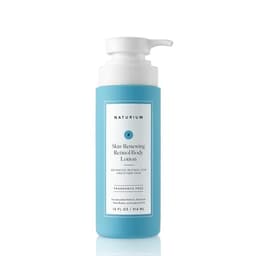
Naturium Skin-Renewing Retinol Body Lotion Jumbo (14 oz)
The same lotion in 14 oz. If you are treating arms and legs rather than just a chest, this is the size the job needs — compare the live per-ounce cost against the 8 oz before you choose.
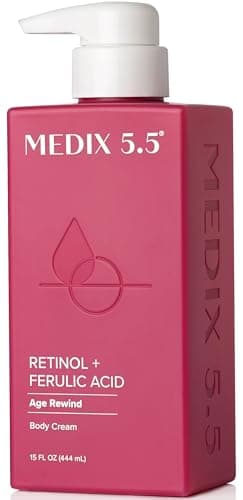
Medix 5.5 Retinol Body Lotion Firming Moisturizer
More lotion for the money if surface area is your whole problem and you want a treatment rather than a moisturizer that treats.
$19.99 · View on AmazonRead the full reviewPrice as of October 20, 2026. #ad How we’re funded
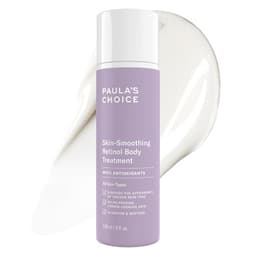
Paula's Choice Retinol Skin-Smoothing Body Lotion Treatment
A treatment-first body lotion from a brand that publishes exact strengths on its face products — though, like everything here, not on this one.
Frequently asked questions
What percentage of retinol is in Naturium's body lotion?
Naturium does not publish it, so our spec table prints 'Not published' and we are not going to fill it in from another site's guess. This is not unique to Naturium — we could not find a single body retinol that states a figure, which is why our body roundup ranks on base, size and cost per ounce instead of on strength. Treat the missing number as a real limitation: you cannot place this product on the strength ladder, and you cannot compare it on potency with anything else.
Should I buy the 8 oz or the 14 oz Jumbo?
Match it to the area you are actually treating. If it is your chest and the backs of your hands, the 8 oz is plenty and you will finish it while it is fresh. If it is arms and legs, the 8 oz is the size that makes people ration a treatment that only works where they apply it — the 14 oz is the honest choice. Both are on this page with a live price, so compare the per-ounce cost at the moment you buy rather than trusting a number we wrote months ago.
Is the Jumbo a different formula?
We cannot say that it is, and we will not say that it isn't. The 14 oz listing title names 'Encapsulated Retinol & Shea Butter' while the 8 oz title names shea butter only. That is a difference between two listings, not documented evidence of two formulas — brands routinely update one listing's copy and not the other. Read it as the same product in two sizes unless Naturium says otherwise.
Can I use it on my face?
You can, but it is not what it is for and it is not the efficient way to buy. A body lotion is formulated for thicker, drier skin over a large area; a face retinol is dosed and textured for facial skin, and several of them publish a strength this does not. Use a face product on your face and keep this for everything below the jaw.
How often should I use it?
Start at two nights a week and build slowly, exactly as you would with a face retinoid. Body skin is not automatically tougher — the inner arms and chest react as readily as a face does. If you are also using a retinoid on your face, introduce the body separately rather than assuming your face schedule transfers.
Will it help with stretch marks or keratosis pilaris?
Only partly, and not as the first thing to reach for. Our stretch marks page sets out the honest evidence — some support for early red striae, very little for mature white ones. For the rough bumps of keratosis pilaris, urea or lactic acid is usually the better first purchase, with a retinoid working on the cause over months. This lotion is aimed at crepey, photoaged texture, which is the concern retinoids have the deepest published evidence for.
Is it fragrance-free?
The listing we read does not state it either way, so we record it as 'Not published' rather than assuming. That is an absence of confirmation, not a finding that it contains fragrance. Our fragrance-free roundup admits only products whose own listing confirms the status.
Do I still need sunscreen if it is only on my body?
Yes, on any skin you treat and then expose. Retinoids raise sun sensitivity and they treat damage the sun caused, so an untreated forearm in daylight is running to stand still. The chest, the backs of the hands and the forearms are exactly the areas people skip, and exactly the areas that show it.
Sources
- American Academy of Dermatology — Retinoid or retinol? — AAD on the difference between prescription retinoids and OTC retinol (accessed July 17, 2026)
- The use of retinoids in the treatment of photoaging (PubMed) — Clinical-trial evidence for topical retinoids in photoaging (accessed July 17, 2026)
- Human Skin Aging and the Anti-Aging Properties of Retinol (PubMed) — Review of topical retinol's effect on collagen and photoaging (accessed July 17, 2026)
- Moisturizers — StatPearls (NCBI Bookshelf) — Reference on humectants (hyaluronic acid), occlusives and emollients (accessed July 17, 2026)
- American Academy of Dermatology — Dermatologists' top tips for relieving dry skin — AAD on moisturizing damp skin and choosing a cream for dry skin (accessed July 17, 2026)
Keep reading
Best retinol body lotions
The whole body category compared on base, size and cost per ounce — and why every single one hides its strength.
See the picksRetinol for crepey skin
The complaint that brings most people to a body retinol, and what a retinoid realistically changes about it.
Read the guideBest retinol for neck & chest
Thinner skin, more sun, and far more area than a face bottle was sized for. Start at one night a week there.
See the picksRetinol strength & percentage
How to read a label that describes everything except the dose — the exact problem this whole category has.
Read the guide