Do not stop. Change the frequency and change the format. Drop to two or three nights a week, move the active from a bare serum into a cream or a retinol-and-moisturizer in one, and be far more generous with moisturizer than you were in August. That handles nearly every winter retinol problem, and the pick to start with if you are currently on a serum is the RoC Retinol Correxion Deep Wrinkle Night Cream— same brand lineage, a cushioning cream base, drugstore money.
The reason this works is that nothing about the retinol changed in December. What changed is the barrier it lands on, and all three causes are environmental.
Why retinol feels harsher in the cold
- Cold air holds less water. Outdoor humidity falls with temperature, so the gradient pulling water out of your skin steepens. The same transepidermal water loss costs you more.
- Indoor heating makes it worse, not better.Warming cold air without adding moisture drops the relative humidity of the room you spend sixteen hours in. The AAD’s own atopic self-care guidance includes keeping temperature and humidity comfortable, which is the part people skip.
- Hot showers strip lipids.The AAD is specific here — bathe in warm, not hot water, and limit it to five or ten minutes, with a mild fragrance-free cleanser used only when needed. A long hot shower on a cold morning removes exactly the surface lipids your retinoid is already turning over faster.
Put those together and you get skin losing water faster than usual before the retinol goes anywhere near it. The retinoid did not get stronger. The barrier got weaker, and the retinoid is the thing that makes a weakened barrier obvious.
The five adjustments, in the order to try them
1. Frequency first, because it is free
If you were on four nights a week, go to three. If you were nightly, go to four. This is the lever with the largest effect and no cost, and it is reversible in a week. Most winter retinol complaints are solved here and nowhere else.
2. Moisturize more, and on damp skin
The AAD’s dry-skin guidance is to moisturize while the skin is still damp and to choose a cream rather than a lotion when skin is dry — and for atopic skin, at least twice a day, with a thick cream or ointment. The pharmacology is simple: humectants pull water in, occlusives slow it leaving, emollients supply the lipids the matrix is short of. Winter needs more of all three than summer does.
3. Change the format, not the strength
A retinol in a bare anhydrous base — squalane and little else — has no humectant and no occlusive in it. That is a fine product in July and a demanding one in January. Moving the same strength into a cream or a retinol moisturizer puts the buffering in the same step, which matters because the step people skip at 11pm is the second one.
4. Sandwich it
Moisturizer, retinoid, moisturizer. It costs some potency and buys a lot of comfort, and in the weeks when the alternative is stopping altogether that is an obviously good trade. Our sandwich method guide has the technique and the honest downside.
5. Fix the shower and the air
Shorter, cooler showers. A humidifier in the bedroom if the heating is dry. Fragrance-free cleanser, used only where you need it. None of this is skincare advice in the product sense, and all of it does more for a flaking winter face than switching retinols does.
The two things the adjustments above assume you own
Neither is a retinol. The cream is the bland, no-actives layer the sandwich method and the AAD's dry-skin guidance both ask for, in a tub size that lets you be generous; the ointment is the overnight seal for the patches that flake first — beside the nose, the corners of the mouth, the spot where you used too much.
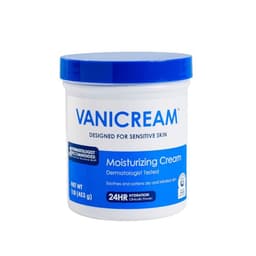
The sandwich layer
Vanicream Moisturizing Cream, 16 oz tub
The dull, no-actives cream the sandwich method asks for — the listing's own pitch is that it is formulated without common irritants, which is the whole specification here. The tub size is the point: buffering only works if you are generous with it.
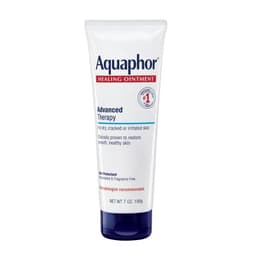
For the flaky patches
Aquaphor Advanced Therapy Healing Ointment, 7 oz
A skin protectant ointment for the places a retinoid peels first — the creases beside the nose, the corners of the mouth, the patch where you used too much. It seals rather than treats, which is exactly what an over-worked barrier needs, and it is the wrong thing to put under a retinol layer.
None of these are retinols — they are the supporting products this page already recommends, listed so you can act on the advice. Product images supplied by Amazon; prices are live and dated on each button.
Two of the picks above have reviews behind them if you want the base examined properly before you switch: the LilyAna Naturals retinol cream, which is the gentlest cream in our registry, and the Neutrogena Rapid Wrinkle Repair moisturizer, which is the fragrance-free one-step option for people who will not layer two products at 11pm.
What winter flaking is, and is not
Dry flaking is fine white scale, worst on the cheeks and around the nose, which improves within an hour of moisturizer and comes back the next day. That is a barrier problem and everything above applies.
Three things it is not. It is not a purge— a purge is small spots appearing faster than usual where you normally break out, not scale. It is not retinol burn, which stings and feels raw and tight rather than simply looking dry. And it is not skin thinning, which is the most persistent myth in the category and runs opposite to the published record. Our guides on the purge, retinol burn and whether retinol thins skin each take one of those apart.