Beauty of Joseon Revive Firming Moisturizer Review
The label says 1.0% fermented retinol. The brand's own footnote says that complex contains 0.01% pure retinol — one hundredth of the number on the front. Both figures are published, which is more than most of this category manages, and the gap between them is the whole review.
How this is funded: we earn a commission if you buy through our links, at no extra cost to you. It never changes which product we recommend, and we’ll tell you when we’d skip one. Full disclosure.
The gentlest thing on this page, and the one to buy if a retinoid has always been a step too far. Ceramides and ginseng in a 60 ml moisturizer with retinol in it — a treatment that happens to be your moisturizer, rather than a treatment you have to buffer.
Strengths
- Ceramides in the base, doing barrier work rather than decorating the label
- 60 ml — double the size of most products here, and it replaces your night cream
- The mildest introduction on this page for skin that reacts to serums
Trade-offs
- Retinol content is not published, and 'fermented' tells you nothing about dose
- A moisturizer-first formula means the retinoid is doing less than a dedicated serum would
| Key active | Fermented retinol + ceramide + ginseng |
|---|---|
| Stated concentration | Not published |
| Format | Firming moisturizer |
| Fragrance-free | Not published |
| Best for | Dry, sensitive skin that wants retinol in one step |
Formulation note. Listed as ginseng and ceramide with fermented retinol. 'Fermented' describes a processing step the brand uses, not a concentration or a different molecule — the amount of retinol is undisclosed, so we print 'Not published'.
Ingredients and claims read from the product listing, on August 13, 2026. “Not published” means the brand does not state that figure.
The number on the front, and the number in the footnote
Most reviews in this category have to work around a brand that publishes nothing. This one has the opposite problem: Beauty of Joseon publishes two numbers, and they differ by a factor of one hundred.
The product is built on what the brand calls 1.0% fermented retinol. Its own ingredient footnote then states that this complex contains 0.01% — 100 ppm — of pure retinol. Both figures are the brand’s, read from its own product page. Neither is hidden.
So the 1.0% is the fermented complex, and the retinoid dose is one hundredth of it. This is the same structure as the Granactive Retinoid 2% that trips people up elsewhere in the category — the big number measures the delivery material, not the active — and it is the single most important thing to understand before buying this moisturizer. A shopper comparing “1.0%” here against a stated 0.5% retinol somewhere else is not reading a stronger product. They are reading a product with one fiftieth of the dose.
We want to be fair about this. Publishing both figures is more transparency than CeraVe, RoC, Neutrogena, Olay or La Roche-Posay offer for any product on this site, and burying the real dose would have been easier and more flattering. The criticism is of the framing, not the disclosure: the large number is on the front and the meaningful one is in a footnote.
What 0.01% actually situates you against
Scale is the only way to make a figure like this useful.
- 0.01% is this product’s pure-retinol dose — and the same pure figure as rung 1 of Medik8’s six-rung Crystal Retinal ladder, which that brand sells as its entry point before 3, 6, 10, 20 and 24.
- 0.1% is what COSRX states for its K-beauty retinol cream — ten times as much, stated flat, with no complex to decode.
- 0.2% to 1.0% is the band the stated-strength serums on this site occupy, and the band the published escalation work used.
Retinol’s evidence base sits at the upper end of that range and above it. The biopsy record most often quoted — collagen I formation around 56% lower in severely photodamaged skin, rising roughly 80% after ten to twelve months of daily use — is prescription tretinoin, a different molecule at a far higher effective dose. Pointing that evidence at 0.01% of a cosmetic retinol would be dishonest, so we will not.
What the formula is genuinely good at
Judge it as a moisturizer with a faint retinoid benefit and it looks much better, which is the framing we would actually buy it on.
The brand’s own exclusive ingredient here is what it calls Ginseng Ceramide, which it defines as formed from fermented ginseng oil and phytosphingosine, combining ginseng extracts with barrier-friendly ceramides. The published list carries Ceramide NP, phytosphingosine and Panax Ginseng Root Extract. No amounts are given for any of them — which, under the federal rule that orders cosmetic ingredient lists by predominance only above one percent, is the normal state of affairs for everything in this formula including the retinol.
Ceramides in a retinoid product do a specific and well-understood job: they support the barrier while the retinoid speeds turnover, which is the mechanism behind most of the tolerability gains in this category. For dry or sensitive skin, a ceramide-carrying gel-cream at 60 ml and a mid-shelf price is a sound purchase on those grounds alone.
What it does not carry is a stated niacinamide figure, and it is not the same formula as the Revive Eye Serum, which uses retinal — one conversion step from retinoic acid rather than two — with niacinamide alongside. People buy these two expecting a matched pair. They are different molecules at different doses for different areas.
The fragrance question, and why we are leaving it open
Beauty of Joseon makes no fragrance-free claim for this product anywhere on its own site. That is worth more than a shrug, because the brand doesmake one for the Revive Eye Serum — we verified that when we reviewed it. A brand that states fragrance-free on one product in a line and stays silent on another is not being careless; it is telling you something by omission.
So the spec table prints “Not published” rather than a guess in either direction. Fragrance is among the commonest causes of allergic contact dermatitis and the reaction can take hours or days to surface, which is the window in which people blame the retinoid. If fragrance-free is a hard requirement for you, this is not the product in the line to buy.
How to actually run it
- Nightly is fine here, and that is unusual. At 0.01% pure retinol the ramp-up most retinoid products need is largely beside the point. If you are new to retinoids this is close to the gentlest possible on-ramp.
- Treat it as your moisturizer, not an addition to one. It is a gel-cream that finishes a routine. Layering it over another moisturizer wastes it.
- Do not expect it to replace a real retinoid. If you have used a stated 0.3% or 0.5% comfortably, this is a step backwards in dose by an order of magnitude. It is a barrier product you are buying for its ceramides.
- Keep it off the eyelid. The brand sells an eye-specific product in the same line for a reason.
- Sunscreen the next morning. A retinoid raises sun sensitivity while skin adjusts, and this is still a retinoid.
On storage: the validated stability work on retinoid derivatives in commercial cosmetics found losses of 0% to 80% over six months at 25 °C and 40% to 100% at 40 °C, with light worse than heat. When the starting dose is 100 ppm there is not much headroom for degradation, so a drawer beats a windowsill here more than it does for a stronger product. The brand publishes no stability data of its own.
What to expect, and when
This is where being honest about 0.01% matters most, because the timeline for a dose this low is not the timeline the category advertises.
Weeks one to four: you should notice the moisturizer working — a more comfortable barrier, less tightness — and essentially nothing from the retinoid. At this dose you also should not expect the dryness, flaking or purge that a stated 0.3% or 0.5% commonly causes in the first fortnight. If you were dreading that, avoiding it is the product’s main selling point.
Months one to three: whatever ceramide-driven improvement in texture and smoothness you are going to get, you have it. Attributing it to the retinol rather than to the barrier support would be a guess.
Months three to ten: the published record for retinoids puts the peak effect on photoageing at around ten months of daily use, with no further gain out to twenty-two. But that record is built on prescription tretinoin and on cosmetic retinols an order of magnitude stronger than this. We are not going to promise you a line-softening result at 100 ppm, because no published work supports one at that dose.
The sensible way to hold it: buy this as a ceramide moisturizer you will enjoy using nightly, and treat any retinoid benefit over a year as a bonus you cannot measure. If after a few months you want a result you can actually see, that is the signal to step up to a stated strength rather than to keep waiting on this one.
Where it sits in the Revive line
People buy these as a set and they are not a matched pair, which is worth knowing before you spend twice.
This moisturizer is retinol, at 0.01% pure, in a ceramide gel-cream, with no fragrance claim. The Revive Eye Serum is retinal — retinaldehyde, one conversion step from retinoic acid where retinol is two — with niacinamide, in a serum, and the brand does publish a fragrance-free claim for it. Different molecule, different format, different area, different disclosure.
That makes the eye serum the more interesting product of the two on this site’s criteria, and it is the one we would buy first if you only want one. The tolerance work comparing retinol, retinaldehyde and retinoic acid found retinol and retinaldehyde share a low irritation potential while retinoic acid is the irritating one — so moving up to the retinal is not the leap it sounds like.
Who should buy it, and who should not
Buy it if you are frightened of retinoids and want the faintest possible introduction inside a genuinely good ceramide moisturizer; if your skin is dry or sensitive and the barrier support is the part you actually want; or if you like the Revive line and want the moisturizer step to match. On those terms it is a fair, well-made product at a fair price, and the brand told you the real number.
Do not buy it if you want a working retinoid dose — 0.01% is not it, and the stated 0.1% and above alternatives cost about the same. Do not buy it if fragrance-free is non-negotiable, since the brand will not confirm it. Do not buy it for the eye area. And do not buy it believing you are getting 1.0% of anything that acts like retinol.
The verdict
An honest brand with a misleading front label, and a good moisturizer carrying a retinoid dose so low it is close to symbolic. The 0.01% is published, which earns Beauty of Joseon more credit than most of this category deserves — and it is a hundredfold smaller than the figure it puts on the front, which is the reason this review exists.
Buy it for the ceramides and the ginseng, at a sensible price, with a retinoid benefit you should treat as a rounding error. If what you actually want is a K-beauty retinoid that does something measurable, the stated 0.1% cream is ten times the dose for similar money, and our Korean retinol roundup ranks the whole field on exactly this question.
General guidance, not medical advice. Retinol Room is written by an enthusiast, not a dermatologist. For a diagnosis, a reaction, or a prescription active like tretinoin, see a qualified professional. Introduce any new active slowly and patch-test first.
If it’s not the one, consider these
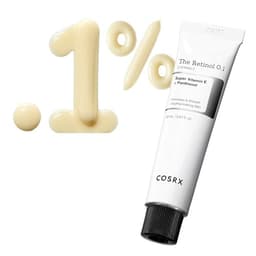
The K-beauty step up, and the honest comparison: COSRX states a flat 0.1% retinol — ten times the pure-retinol dose here, stated plainly without a complex to decode. A cream rather than a gel-cream, marketed for the eye and neck area. Buy it if you have used a retinoid before and the Beauty of Joseon dose turns out to be too gentle to do anything.
Read the full review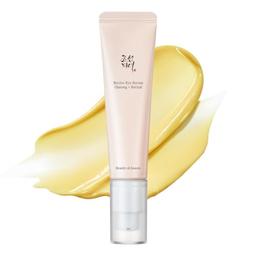
Beauty of Joseon Revive Eye Serum with Retinal & Niacinamide
The sibling in the same Revive line, and a genuinely different molecule: retinal rather than retinol, with niacinamide, in an eye-specific formula the brand does state is fragrance-free. Buy it alongside rather than instead — this moisturizer is not dosed or marketed for the eyelid.
Read the full review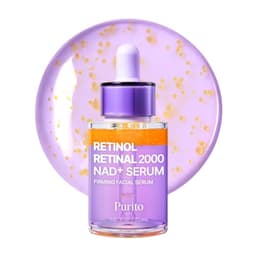
PURITO Retinol + Retinal Serum for Sensitive Skin
The pick if you want stated numbers and both molecules at once: PURITO prints 0.1% retinol plus 0.1% retinal on the front of a sensitive-skin serum at a similar price. More active, more legible, and a serum you layer rather than a moisturizer that finishes the routine.
Frequently asked questions
What percentage retinol is in Beauty of Joseon Revive Firming Moisturizer?
Two numbers, and you need both. The brand builds the product on what it calls 1.0% fermented retinol, and its own ingredient footnote states that this complex contains 0.01% — 100 ppm — of pure retinol. So the 1.0% on the label is the fermented complex, not the retinoid dose, and the actual pure-retinol figure is one hundredth of it. Credit where it is due: Beauty of Joseon publishes both figures, which most of this category does not. But a reader who treats 1.0% as a retinol strength is off by a factor of a hundred.
Is 0.01% retinol strong enough to do anything?
It is at the very bottom of the range, and you should buy it with that in mind. For scale, 0.01% is the same pure figure as the lowest rung of Medik8's Crystal Retinal ladder, and it is a tenth of the 0.1% that COSRX states for its K-beauty cream. Retinol's published record is built on much higher cosmetic doses and on prescription tretinoin. What a dose this low realistically offers is a very gentle introduction for someone who has never used a retinoid and is frightened of one — not a result you should expect to photograph.
What is fermented retinol?
It is the brand's term for the form of retinol it uses, which it describes as an especially skin-friendly one. The important part for a buyer is the arithmetic rather than the biochemistry: the fermented complex is the thing measured at 1.0%, and the pure retinol inside it is 0.01%. No brand, including this one, publishes a conversion showing that a fermented complex performs differently from plain retinol at the same pure dose, so treat the fermentation as a tolerability story and judge the dose on the 0.01%.
Is it fragrance-free?
Unknown, and we will not guess. Beauty of Joseon makes no fragrance-free claim for this product anywhere on its own site — notably it does make one for its Revive Eye Serum, so the silence here is worth noticing rather than reading as an oversight. We record its fragrance status as "Not published" rather than inferring from a sibling product. If fragrance-free is a requirement, buy the eye serum or a product that states it.
Can I use it while pregnant?
No, and the brand says so itself: it states plainly that the product contains retinol, an ingredient not recommended for pregnant women. That is the right answer and it is to the brand's credit that it is on its own page. The low dose does not change the guidance — the advice to avoid topical retinoids in pregnancy is categorical rather than dose-dependent, and our pregnancy guide covers what to use instead.
Does it actually firm or lift anything?
Not in the structural sense the name implies. The AAD is explicit that a cream or lotion cannot penetrate deeply enough to lift sagging skin and that firming-cream results are subtle at best, with the one exception being that a retinoid may produce a small change by helping the body make more collagen. At 0.01% pure retinol that exception is being invoked at the faintest end of its range. Read "firming" here as the category's standard vocabulary, not as a claim with a number behind it.
Sources
- Beauty of Joseon — Revive Firming Moisturizer product page + fermented-retinol explainer — The brand's own product page and its ingredient footnote, read November 7, 2026, carrying the figure this review turns on: the moisturizer is built on "1.0% fermented retinol", which the brand itself states "contains 0.01% (100 ppm) pure retinol". So the 1.0% is the FERMENTED COMPLEX and the pure-retinol dose is one hundredth of it — the brand publishes both numbers, which is more than most of this category does, but a reader who reads 1.0% as a retinol strength is off by a factor of a hundred. The brand defines its exclusive "Ginseng Ceramide" as "formed from fermented ginseng oil and phytosphingosine", combining "ginseng extracts and barrier-friendly ceramides"; the published list contains Ceramide NP, Phytosphingosine and Panax Ginseng Root Extract, with no amounts given for any of them. The brand also states plainly that the product "contains retinol, an ingredient not recommended for pregnant women". Cited for the two percentages, the Ginseng Ceramide definition and the pregnancy note — NOT for a fragrance-free claim, which the brand makes nowhere for this product (accessed November 7, 2026)
- U.S. FDA — 21 CFR 701.3, Designation of ingredients (eCFR) — The federal rule governing how a cosmetic ingredient list is ordered. Paragraph (a): 'The label on each package of a cosmetic shall bear a declaration of the name of each ingredient in descending order of predominance, except that fragrance or flavor may be listed as fragrance or flavor.' Paragraph (f) allows an alternative: ingredients 'present at a concentration greater than 1 percent, in descending order of predominance', followed by ingredients 'present at a concentration of not more than 1 percent, without respect to order of predominance', followed by color additives 'without respect to order of predominance'. Cited for the exact limit of what an ingredient's POSITION can tell a reader: late placement indicates the 1-percent-or-less group, but within that group the order carries no information about quantity (accessed September 26, 2026)
- Human Skin Aging and the Anti-Aging Properties of Retinol (PubMed) — Review of topical retinol's effect on collagen and photoaging (accessed July 17, 2026)
- Tolerance profile of retinol, retinaldehyde and retinoic acid under maximized and long-term clinical conditions (PubMed) — Retinol and retinaldehyde share a low irritation potential; retinoic acid (tretinoin) is more irritating (accessed July 17, 2026)
- Griffiths CE et al. — Restoration of collagen formation in photodamaged human skin by tretinoin (N Engl J Med, 1993) — Biopsies from 26 subjects plus 29 patients treated 10 to 12 months with daily 0.1% tretinoin cream (15 patients) or vehicle (14). Collagen I formation was 56% LOWER in photodamaged skin than in sun-protected buttock skin (P < 0.001); tretinoin produced an 80% INCREASE in collagen I formation against a 14% decrease on vehicle (P = 0.006). Prescription tretinoin, not cosmetic retinol — cited for the direction of the effect on dermal collagen (accessed September 18, 2026)
- American Academy of Dermatology — Retinoid or retinol? — AAD on the difference between prescription retinoids and OTC retinol (accessed July 17, 2026)
- Mechanistic Basis and Clinical Evidence for Nicotinamide (Niacinamide) in Skin (PMC) — Review of niacinamide's barrier, ceramide and pigmentation effects (accessed July 17, 2026)
- Moisturizers — StatPearls (NCBI Bookshelf) — Reference on humectants (hyaluronic acid), occlusives and emollients (accessed July 17, 2026)
- American Academy of Dermatology — How can I find eczema friendly products? — AAD sets out the difference between the labels: unscented means a fragrance is masked so you cannot smell it, fragrance-free means the product contains no fragrance at all (accessed August 19, 2026)
- American Academy of Dermatology — Eczema types: Contact dermatitis causes — AAD names fragrance among the most common causes of allergic contact dermatitis, and notes the rash can take hours or days to appear (accessed August 19, 2026)
- American Academy of Dermatology — Dermatologist-approved pregnancy skin care — AAD lists retinoids among the products to avoid during pregnancy, naming isotretinoin, tretinoin, tazarotene and over-the-counter retinol, and suggests vitamin C and glycolic acid instead (accessed August 19, 2026)
- American Academy of Dermatology — Many ways to firm sagging skin — The AAD's own consumer page on skin tightening, and the clearest published statement of what a topical can and cannot do about laxity. On creams: 'If you're looking for facelift-like results from a jar, you'll likely be disappointed', 'Despite the claims, the results you see from a skin-firming cream will be subtle at best', and a cream or lotion 'cannot penetrate the skin deeply enough' to lift sagging skin — while 'A good moisturizer can plump up your skin, making fine lines and wrinkles less noticeable. This result is temporary.' On retinoids specifically: 'You may see a small change if a product contains a retinoid, such as retinol, which can help your body make more collagen.' It then lists the procedures that do tighten, with the AAD's own timelines: ultrasound, 'With 1 treatment, most people see modest lifting and tightening within 2 to 6 months'; non-invasive radiofrequency, best results 'in about 6 months' and 'Results can last 2 to 3 years'; laser treatment, '3 to 5 treatments' with results 'between 2 and 6 months'; minimally invasive radiofrequency, 'gradual tightening and lifting for close to 1 year'; laser resurfacing, the 'Most effective procedure for tightening loose skin'; and 'A surgical lift, such as a facelift or eyelid surgery, will give you the most dramatic results.' On candidacy it advises being at a healthy weight, eating a healthy diet, quitting smoking, drinking little alcohol, protecting skin from the sun and never tanning indoors, and having 'a small amount of sagging skin' — adding 'Do you have lots of sagging skin? If so, skin-tightening may not be helpful.' Cited for the published limit on topicals and for what the real treatments for laxity are (accessed October 3, 2026)
- American Academy of Dermatology — How to apply sunscreen — AAD on how much sunscreen to use (about a teaspoon for the face) and reapplying every two hours (accessed August 11, 2026)
- Temova Rakuša Ž, Škufca P, Kristl A, Roškar R — Retinoid stability and degradation kinetics in commercial cosmetic products (J Cosmet Dermatol, 2021) — Validated HPLC-UV study of 16 retinoid derivatives (retinol, retinyl palmitate, beta-carotene and hydroxypinacolone retinoate) in 12 commercial cosmetics over 6 months of long-term and accelerated stability testing plus a one-week photostability study. Retinoid degradation followed first-order kinetics; the products showed a 0%-80% decline after 6 months at 25 °C and a 40%-100% decline at 40 °C; 'light degradation was more pronounced than temperature-induced degradation'; instabilities were 'formulation-dependent and associated with lower contents than declared in some cosmetics'. Cited for the size of the stability problem a sealed single-dose format is built to solve — the study did not test this product (accessed September 19, 2026)
Keep reading
Best Korean retinol
The category this sits in, and why K-beauty brands publish percentages more often than the drugstore shelf.
See the picksBeauty of Joseon Revive Eye Serum, reviewed
The sibling product: retinal rather than retinol, and a fragrance-free claim the brand is willing to make.
Read the reviewRetinol strength & percentage
How to read a number like this one, and why a complex percentage is not a dose.
Read the guideBest retinol for beginners
Where a dose this low genuinely belongs, ranked against the stated low strengths it competes with.
See the picksCOSRX Retinol 0.1% Cream, reviewed
The K-beauty step up, at ten times this product's pure-retinol figure and stated without a complex.
Read the reviewRetinol during pregnancy
Why the brand's own warning applies regardless of how low the dose is, and what to use instead.
Read the guide