Beauty of Joseon Revive Eye Serum Review
Retinal — the potent one-step-from-tretinoin form of vitamin A — wrapped in a liposome, buffered with niacinamide, and sold for about the price of a sandwich. The formula is more transparent than most. The one number that would settle it is still missing, and the brand's own directions disagree with ours.
How this is funded: we earn a commission if you buy through our links, at no extra cost to you. It never changes which product we recommend, and we’ll tell you when we’d skip one. Full disclosure.
The cheapest retinal-containing product we have found anywhere, in a 30 ml bottle sold for the eye area — which in practice means most people use it as a face serum too. Retinal plus niacinamide is a sound pairing: the potent form of vitamin A with the barrier ingredient that makes it tolerable.
Strengths
- Retinal paired with niacinamide, which is the buffering combination that actually works
- 30 ml for eye-area use is a lot of product for the price
- Light serum texture rather than a heavy eye cream
Trade-offs
- Retinal concentration is not published
- Sold for the eye area, so it is dosed conservatively — not a substitute for a face retinoid
| Key active | Retinal (retinaldehyde) + niacinamide |
|---|---|
| Stated concentration | Not published |
| Format | Light eye serum |
| Fragrance-free | Yes |
| Best for | Fine lines around the eyes on a small budget |
Formulation note. Retinaldehyde with niacinamide in an eye serum. The brand publishes its full 36-ingredient list and states fragrance-free: niacinamide is 7th, the hydrogenated lecithin that forms the retinal liposomes is 13th, ginseng root extract 14th, and retinal itself is 28th. No percentage is stated for either active, so treat it as a gentle introduction to retinal rather than a rung you can place.
Ingredients and claims read from the product listing, on September 26, 2026. “Not published” means the brand does not state that figure.
There is a reasonable argument that this is the most interesting product on the site, and it has nothing to do with how well it works. It is that Beauty of Joseon publishes all thirty-six of its ingredients, explains its delivery system in plain language, states it is fragrance-free, footnotes its clinical claim with the lab that ran it and the number of people in it — and then declines to print the single number that would let you place it on a ladder.
That combination of unusual openness and one pointed omission is worth taking apart, because it is the situation most retinoid buyers are actually in. This review is about what an ingredient list can honestly tell you when the percentage is missing, and where it stops.
What retinal is, and why it matters here
Retinal — retinaldehyde — is the rung of the vitamin A ladder directly below prescription retinoic acid. Your skin converts retinol to retinal, then retinal to retinoic acid, which is the form that actually does the work. Buying retinal skips a step, so at the same label percentage it is the more potent purchase.
The more useful finding is about tolerance. The published comparison of retinol, retinaldehyde and retinoic acid under maximized and long-term conditions found that retinol and retinaldehyde share a low irritation potential, while retinoic acid is the irritating one. That is the reason retinal is interesting for an eye area at all: closer to the prescription end of the family on potency, closer to the cosmetic end on irritation. Our retinol vs retinal comparison sets out the full trade.
So the form is the right one for this job. The question is how much of it is in the bottle.
Reading the ingredient list honestly
Beauty of Joseon publishes the complete formula, which already puts it ahead of most of the drugstore shelf. Here is where the things that matter sit, counting from the top of a thirty-six-item list:
- Niacinamide — 7th. High in the list, and high enough to be doing real work rather than appearing as a marketing token.
- Hydrogenated lecithin — 13th. This is the liposome. The brand names it as the carrier that encloses the retinal.
- Panax ginseng root extract — 14th. The brand’s signature ingredient, present in a meaningful position rather than as a trace.
- Retinal — 28th. The active the product is named for, in the back third of its own ingredient list.
- Ceramide NP and palmitoyl tripeptide-5 — last two. Barrier support and a peptide, both in trace territory.
Now the part most ingredient-list analysis gets wrong. It is tempting to read “28th of 36” as “barely any,” and that is further than the evidence goes. The FDA’s labeling rule requires ingredients to be declared “in descending order of predominance,” but it also permits a grouped alternative: everything above 1% in descending order, then everything “present at a concentration of not more than 1 percent, without respect to order of predominance.”
In other words, position 28 tells you retinal is in the 1-percent-or-less group. Within that group, the order carries no information at all. And 1% or less is completely normal for a retinoid — the two stated-strength retinals we rank are The Ordinary’s 0.2% and Naturium’s 0.10%, both comfortably inside that group. So the honest conclusion is narrow but real: the list is consistent with anything from a token dusting to a serious 0.1%, and it cannot distinguish between them. That is precisely why we keep asking brands to print the number, and why our strength guide treats a published percentage as the single most useful thing on a label.
The liposome is a real choice, not a word
Retinal’s practical problem is that it is unstable. The 2021 analysis of retinoid stability across twelve commercial cosmetics found declines of up to 80% over six months at room temperature, with light doing more damage than heat, and instability that was formulation-dependent rather than uniform. Encapsulation is the standard answer, and the hydrogenated lecithin sitting at position 13 is the physical evidence that the brand did it.
Encapsulation usually buys two things: the active survives longer in the bottle, and it is released more gradually into skin, which tends to improve tolerance. Both are worth having on an eye product. Neither is a potency claim. Our encapsulated roundup covers the distinction between this kind of molecular encapsulation and the sealed single-dose capsule format, which solves a different problem.
The niacinamide is the quiet reason this works for beginners
Niacinamide at position 7 is not a garnish. It is a barrier-supporting ingredient, and pairing it with a retinoid is the formulation move that makes potent vitamin A tolerable on thin skin.
The most relevant published work here is an eight-week randomized study in 196 women with moderate periorbital wrinkles — the exact area this product is sold for. A cosmetic regimen built on 5% niacinamide with peptides and retinyl propionate was compared against prescription 0.02% tretinoin. The cosmetic regimen improved wrinkle appearance more than tretinoin at eight weeks, matched it at twenty-four, and was significantly better tolerated throughout on every measure the investigators took.
Read that carefully, because it cuts both ways. It is genuine evidence that a niacinamide-forward cosmetic product can do useful work around the eyes. It is not evidence about this product, which is a different formula at an unstated strength. Our retinol with niacinamide roundup goes through the pairing in full, including the myth that niacinamide cancels out a retinoid.
The claim, and what it is worth
The brand states the serum is “clinically tested to improve the appearance of wrinkles by 8.65% in two weeks,” footnoted to a study by the Korea Dermatology Research Institute on 21 subjects over two weeks.
Credit where it is due: naming the lab, the sample size and the duration is more disclosure than most brands offer, and the figure itself is refreshingly modest rather than a round marketing number. But twenty-one people over two weeks is a small, short, brand-commissioned study with no published paper you can read, no control arm described, and no peer review. Two weeks is also well short of the timescale on which retinoids do their documented work — the photoaging literature measures change over months, not fortnights. Take the 8.65% as an indication the product was tested rather than as a result you should expect.
Where we disagree with the label
Beauty of Joseon’s own directions say to “use morning and night, and always layer under sunscreen during the day.” We would not start there.
Retinoids are degraded by light and increase sun sensitivity, which is why the category conventionally lives in the evening routine and why the AAD frames over-the-counter retinoids as a nighttime step. The stability work above found light to be the bigger degradation route. Applying a retinal in the morning is not dangerous, and the brand’s sunscreen instruction is the right mitigation — but it is the harder version of the routine, and for an eye area on someone new to retinoids there is no reason to take it on.
Start at night, two or three nights a week, and build from there. Our morning or night guide covers the reasoning in full. If you do add a daytime application later, treat the sunscreen line as mandatory rather than advisory.
The price is the strongest thing about it
This is the cheapest way we know of to put retinal near your eyes, and it arrives in a 30 ml bottle — a large size for an eye product, where 15 ml is common. Even accepting that the dose is conservative and unstated, the cost of finding out whether your eye area tolerates a retinoid is genuinely small here.
That reframes the whole purchase. As a treatment you are betting on, the missing number is disqualifying. As a low-cost, well-formulated, fragrance-free way to introduce a potent retinoid form to the most reactive skin on your face, it is hard to argue with. Our Korean retinol roundup makes the broader point that this shelf publishes exact percentages more often than the US drugstore aisle does — which makes this particular omission more conspicuous, not less.
Who it suits
Anyone who wants to try a retinoid around the eyes without committing money or tolerance to the attempt. Anyone who reacts to fragrance — this is fragrance-free where much of the drugstore eye shelf is not. Anyone building a gentle K-beauty routine who wants the vitamin A step to be the potent form rather than the weakest one.
It also suits people who want to read a formula before they buy it. Thirty-six ingredients, published, with the delivery system explained, is more than almost any competitor offers.
Who should skip it
Anyone who wants a number. If you are stepping deliberately up a ladder, an unstated dose is not a rung, and one of the two stated-strength retinals below will serve you better.
Anyone treating real, established photoaging around the eyes: a conservative eye-area dose of an undisclosed strength is not the tool for that job, and our under-eyes guide is honest about which complaints a retinoid reaches at all. And anyone hoping to fix dark circles or eye bags — those are usually structure and shadow rather than skin quality, and no retinoid changes anatomy.
How to use it
At night, on clean dry skin. One or two pumps, patted around the orbital bone with a ring finger rather than dragged across the lid. Two nights a week to begin, building slowly, per our frequency guide. The brand recommends a 24-hour patch test if your skin is sensitive, and on this area that is worth doing.
Moisturizer over the top. Keep strong acids and vitamin C to other evenings while you adjust, per the layering guide. Broad-spectrum sunscreen every morning — the brand asks for it and so do we, and it matters more on skin you are treating with a retinoid.
The verdict
A well-made, unusually transparent, genuinely inexpensive introduction to retinal on the most delicate skin you own. The liposome is a real formulation choice, the niacinamide is positioned to do actual work, the fragrance-free status is confirmed by the list itself, and the price makes the experiment close to free.
The reservations are the missing percentage and the morning-and-night instruction. The first means you cannot place this product on any ladder or compare it on potency with anything that prints a number — and a brand willing to publish thirty-six ingredients could publish thirty-seven. The second is simply the harder way to run a retinoid routine. Buy it as a first step, keep it to the evening, and move to a stated strength when you want to know what you are actually using.
General guidance, not medical advice. Retinol Room is written by an enthusiast, not a dermatologist. For a diagnosis, a reaction, or a prescription active like tretinoin, see a qualified professional. Introduce any new active slowly and patch-test first.
If it’s not the one, consider these
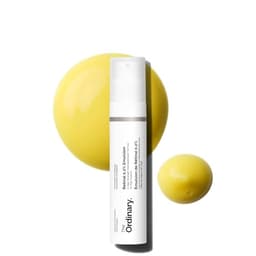
The Ordinary Retinal 0.2% Emulsion
If the missing percentage is the dealbreaker: a stated 0.2% retinal for around the same money. A face product, not an eye one, and emphatically not a beginner rung.
Read the full review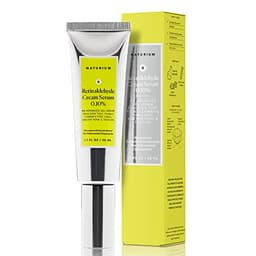
Naturium Retinaldehyde Cream Serum 0.10%
A stated 0.10% retinal in a cream serum sized for face, neck and chest — the published-strength option if you want retinal on more than the eye area.
Read the full review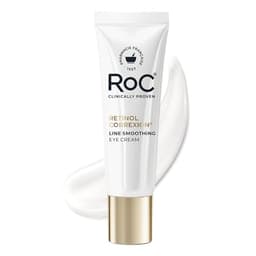
RoC Retinol Correxion Under Eye Cream
The drugstore eye-area default if you want a product formulated only for eyes. Retinol rather than retinal, strength also unstated, and it contains fragrance.
Read the full review
Frequently asked questions
What percentage of retinal is in Beauty of Joseon Revive Eye Serum?
Beauty of Joseon does not publish it — not on the product page, not in the brand's own ingredient explainer, not on the Amazon listing. Our spec table prints 'Not published' and we will not guess. What we can tell you is where retinal sits in the ingredient list: 28th of 36. Under the FDA's labeling rule, ingredients over 1% must be listed in descending order of predominance, while everything at 1% or less may be listed in any order. So position 28 places it in the 1-percent-or-less group — which is entirely normal for a retinoid — but it cannot tell you whether that means 0.05% or 0.3%.
Is it strong enough to do anything?
Honestly, we cannot tell you, and neither can the brand's own marketing. Retinal is potent per unit — it is one metabolic step from retinoic acid where retinol is two — so a small amount goes further than the same figure of retinol would. But 'potent per unit' multiplied by an undisclosed amount is still an unknown. The brand's own clinical claim is an 8.65% improvement in wrinkle appearance over two weeks in 21 subjects, which is a small, short, brand-commissioned study and not a published trial. Treat this as a gentle introduction to retinal rather than a treatment you can rely on for real photoaging.
Can I use it on my whole face?
Plenty of people do, and at 30 ml for this price the math tempts everyone. Two things to weigh. It is dosed and tested for the eye area, so it is likely conservative for a full face — you may be paying for a large bottle of something too mild for the job. And the texture is a light serum rather than a rich eye cream, so it layers fine. If your real goal is a face retinoid, buy a face retinoid; the alternatives below include two that publish a strength.
The brand says use it morning and night. Should I?
This is the one place we disagree with the label, and we would rather say so. Beauty of Joseon's directions read 'Use morning and night, and always layer under sunscreen during the day.' Retinoids are degraded by light and raise sun sensitivity, which is why the whole category is conventionally a nighttime step and why the AAD frames it that way. A 2021 analysis of retinoid stability in commercial cosmetics found light did more damage than heat. Our advice: start at night only, a few nights a week. If you later want to add a morning application, the sunscreen instruction is not optional.
What are 'retinal liposomes'?
A delivery and stability system. The brand states that 'the highly-sensitive retinal is enclosed in a special carrier called a liposome' made of hydrogenated lecithin — which does appear in the ingredient list, 13th, well above the retinal itself. The idea is sound: retinal is unstable in light and air, and encapsulating it protects it and releases it more gradually, which usually means better tolerance. It is a real formulation choice, not a word on a box. It is also not a strength claim, and it does not make an undisclosed dose knowable.
Is it fragrance-free?
Yes. The brand states 'Fragrance-Free' outright and no fragrance, parfum or essential oil appears anywhere in the published 36-ingredient list. That matters more on the eye area than almost anywhere else, and it is a genuine point in this product's favor — the drugstore eye creams it competes with on price are frequently fragranced.
Is this good for a retinoid beginner?
As an introduction to the eye area, yes — probably the gentlest way to put a retinoid near your eyes, and the price means a failed experiment costs very little. The niacinamide is doing real work here: it is a barrier-supporting ingredient, and in a study of 196 women with periorbital wrinkles a cosmetic niacinamide regimen was significantly better tolerated than prescription tretinoin. Just start at two nights a week, use the patch test the brand itself recommends, and do not assume that tolerating this means you would tolerate a stated-strength retinal.
Will it fix dark circles or eye bags?
Probably not, and the listing's mention of them is the least defensible thing about it. Dark circles are often pigmentation, vascular shadowing, or hollowing from the underlying structure — a retinoid does little for the last two, which are anatomy rather than skin quality. Puffiness is fluid and fat pad position. What a retinoid has published evidence for is fine lines and texture over months. Our under-eyes guide sets out which of the three complaints are actually addressable.
Sources
- Beauty of Joseon — Revive Eye Serum: Ginseng + Retinal (brand product page) — The brand's own page for the product Amazon lists as 'Revive Eye Serum with Retinal Niacinamide'. Publishes the full 36-ingredient INCI, in which niacinamide is 7th, hydrogenated lecithin (the liposome carrier the brand names) 13th, panax ginseng root extract 14th and RETINAL 28th, with ceramide NP and palmitoyl tripeptide-5 last. States 'Fragrance-Free'; directions are 'Pump the applicator 1-2 times and use your ring finger to gently pat the product under the eyes and around the eye area. Use morning and night, and always layer under sunscreen during the day', plus 'If you have sensitive skin, we recommend a 24-hour patch test before use'. Its efficacy claim is 'Clinically tested to improve the appearance of wrinkles by 8.65% in two weeks', footnoted 'According to a study conducted by Korea Dermatology Research Institute on 21 subjects over two weeks' — a small, unpublished, brand-commissioned study. The brand's ingredient explainer states 'the highly-sensitive retinal is enclosed in a special carrier called a liposome' of hydrogenated lecithin. NO retinal or niacinamide percentage is stated anywhere on the brand's site. Cited for what the brand publishes about its own formula, never as evidence of efficacy (accessed September 26, 2026)
- U.S. FDA — 21 CFR 701.3, Designation of ingredients (eCFR) — The federal rule governing how a cosmetic ingredient list is ordered. Paragraph (a): 'The label on each package of a cosmetic shall bear a declaration of the name of each ingredient in descending order of predominance, except that fragrance or flavor may be listed as fragrance or flavor.' Paragraph (f) allows an alternative: ingredients 'present at a concentration greater than 1 percent, in descending order of predominance', followed by ingredients 'present at a concentration of not more than 1 percent, without respect to order of predominance', followed by color additives 'without respect to order of predominance'. Cited for the exact limit of what an ingredient's POSITION can tell a reader: late placement indicates the 1-percent-or-less group, but within that group the order carries no information about quantity (accessed September 26, 2026)
- Tolerance profile of retinol, retinaldehyde and retinoic acid under maximized and long-term clinical conditions (PubMed) — Retinol and retinaldehyde share a low irritation potential; retinoic acid (tretinoin) is more irritating (accessed July 17, 2026)
- Fu JJ, Hillebrand GG, Raleigh P, et al. — A randomized, controlled comparative study of the wrinkle reduction benefits of a cosmetic niacinamide/peptide/retinyl propionate product regimen vs. a prescription 0.02% tretinoin product regimen (Br J Dermatol, 2010) — 8-week randomized, parallel-group study in 196 women with moderate to moderately severe periorbital wrinkles, with cohorts of 25 continued to 24 weeks. The cosmetic regimen (n = 99) used a 5% niacinamide SPF 30 lotion, a niacinamide/peptide cream and a targeted product containing niacinamide, peptides and 0.3% retinyl propionate; the prescription regimen (n = 97) used 0.02% tretinoin plus an SPF 30 sunscreen. The cosmetic regimen significantly improved wrinkle appearance after 8 weeks relative to tretinoin, with comparable benefits after 24 weeks, and was significantly better tolerated than tretinoin through 8 weeks by all measures (clinical erythema and dryness grading, subject self-assessment, transepidermal water loss and stratum corneum protein changes) (accessed August 31, 2026)
- Temova Rakuša Ž, Škufca P, Kristl A, Roškar R — Retinoid stability and degradation kinetics in commercial cosmetic products (J Cosmet Dermatol, 2021) — Validated HPLC-UV study of 16 retinoid derivatives (retinol, retinyl palmitate, beta-carotene and hydroxypinacolone retinoate) in 12 commercial cosmetics over 6 months of long-term and accelerated stability testing plus a one-week photostability study. Retinoid degradation followed first-order kinetics; the products showed a 0%-80% decline after 6 months at 25 °C and a 40%-100% decline at 40 °C; 'light degradation was more pronounced than temperature-induced degradation'; instabilities were 'formulation-dependent and associated with lower contents than declared in some cosmetics'. Cited for the size of the stability problem a sealed single-dose format is built to solve — the study did not test this product (accessed September 19, 2026)
- American Academy of Dermatology — Retinoid or retinol? — AAD on the difference between prescription retinoids and OTC retinol (accessed July 17, 2026)
- Human Skin Aging and the Anti-Aging Properties of Retinol (PubMed) — Review of topical retinol's effect on collagen and photoaging (accessed July 17, 2026)
Keep reading
Best Korean retinol
The shelf this comes from, and why K-beauty prints an exact percentage far more often than the US drugstore aisle does.
See the picksRetinol vs retinal
One conversion step versus two, and what that actually buys you at the same label strength.
Compare the twoRetinol for under-eyes
What a retinoid genuinely fixes around the eyes — and the three complaints it does not touch.
Read the guideBest retinol eye creams
The eye-area category ranked, with the drugstore options this serum undercuts on price.
See the picksBest retinol with niacinamide
Why the pairing is sound formulation rather than marketing, and which products actually contain both.
See the picksRetinol strength & percentage
How to read a label that describes everything except the dose — the exact problem this product has.
Read the guide