Slugging With Retinol
An occlusive layer does not just lock moisture in — it increases how much of whatever is underneath gets into your skin. That makes slugging directly over a retinoid a stronger night, not a gentler one. Here is how to get the comfort without the ambush.
How this is funded: we earn a commission if you buy through our links, at no extra cost to you. It never changes which product we recommend, and we’ll tell you when we’d skip one. Full disclosure.
Slugging is the one recent skincare trend whose mechanism nobody argues about. You put a thick occlusive layer — usually a petrolatum ointment — over everything at the end of a night routine, and it slows the rate at which water evaporates out of the skin. Dry, tight, over-exfoliated skin wakes up noticeably better. It works.
The complication is what an occlusive does to the layer underneath it. Occlusion increases the penetration of topical ingredients — that is a well-established property of occlusive dressings, not a controversy. So sealing a retinoid under petrolatum does not soften the night. It intensifies it.
Which means the people most likely to try slugging — those whose faces are flaking after starting a retinoid — are also the people for whom the naive version is most likely to backfire.
Slugging is not the sandwich method
These two get used interchangeably online and they do opposite things:
- The sandwich puts a plain moisturizer underneath the retinoid, and another layer on top. The bottom layer is the point — it sits between the active and your skin and moderates how much gets in. It is a way of turning the intensity down. Our sandwich method guide covers it properly.
- Slugging puts an occlusive over the top with nothing between it and the active. It seals the retinoid against your skin for the night, which turns the intensity up.
If you have been doing what you thought was a gentle sandwich but is actually a slug over bare retinol, that alone may explain a reaction you have been blaming on the product.
Who slugging over a retinoid actually suits
There is a real use case, and it belongs to experienced users. If you tolerate a retinoid comfortably every night, your barrier is stable, and you want more from a product you have plateaued on, adding occlusion is a deliberate way to increase exposure without buying a higher strength — and it costs nothing.
Treat it exactly like a strength increase, because that is what it is. Do it on one night, not every night. Do not do it in the same fortnight you changed anything else. And expect that it can produce the dryness and flaking a step up produces, on a delay of a few days.
Who it does not suit: anyone in their first two months, anyone currently flaking, anyone who stepped up a strength recently, and anyone acne-prone enough that a full-face occlusive is a gamble. Our frequency guide is the better lever for all four of those groups.
The safe version: slug over a buffer
If you want the comfort of slugging on a retinoid night, put something between the two. The sequence:
- Cleanse, and wait until your skin is completely dry.
- Retinoid, a pea-sized amount for the whole face.
- Plain fragrance-free moisturizer — a real layer, not a smear. Give it a few minutes to settle rather than piling straight on.
- A thin layer of occlusive over the top, on the dry areas that need it rather than the whole face.
The moisturizer in step three is what changes the physics. You are now sealing a moisturizer against your skin rather than sealing an active against it, which is the outcome most people wanted from slugging in the first place.
The safer version still: slug on off nights
The cleanest answer for anyone still building tolerance is to keep the two apart. Retinoid nights are retinoid nights; the nights in between are when you repair. Slugging on an off night gives you the full occlusive benefit with none of the penetration question, and it makes the next retinoid night more comfortable rather than less.
This also fits the way a sensible retinoid schedule already looks. If you are on two or three nights a week, you have four or five free evenings a week to be generous with moisture. Using them is a better plan than trying to do everything at once on Tuesday.
What slugging actually needs
Two products, neither of them a retinol and neither expensive: the plain cream that goes between the retinoid and the seal, and the ointment that does the sealing. These are the same two this site recommends for the flaky phase, because it is the same problem.
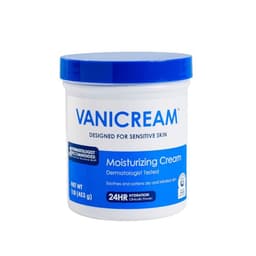
The sandwich layer
Vanicream Moisturizing Cream, 16 oz tub
The dull, no-actives cream the sandwich method asks for — the listing's own pitch is that it is formulated without common irritants, which is the whole specification here. The tub size is the point: buffering only works if you are generous with it.
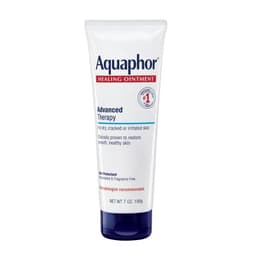
For the flaky patches
Aquaphor Advanced Therapy Healing Ointment, 7 oz
A skin protectant ointment for the places a retinoid peels first — the creases beside the nose, the corners of the mouth, the patch where you used too much. It seals rather than treats, which is exactly what an over-worked barrier needs, and it is the wrong thing to put under a retinol layer.
Price as of October 4, 2026. #ad How we’re funded
None of these are retinols — they are the supporting products this page already recommends, listed so you can act on the advice. Product images supplied by Amazon; prices are live and dated on each button.
Where not to put it
- The T-zone, if you are congestion-prone. A full-face occlusive traps sebum along with the moisture. Dry cheeks and a slugged forehead are a bad combination for skin that breaks out.
- Directly over an acid or a strong vitamin C. The penetration point applies to every active, not just retinoids, and acids under occlusion is a route to a genuinely uncomfortable morning.
- Over broken or weeping skin. Occlusion over a compromised area is a question for a doctor, not a routine step.
- On the eyelids, thickly. A thin film on crow’s-feet is fine; a heavy layer migrates and can cause milia and puffiness. Our under-eye guide covers the area properly.
What slugging cannot do
It is worth being clear about the ceiling. Occlusion slows water loss; it does not add water to skin, and it does not treat anything. Slugging over a bare face on a dry night helps less than slugging over a properly hydrated one, which is why the order matters.
And it does not fix a retinoid problem. If you need an occlusive every single night to tolerate your product, the message is about the product or the frequency, not the ointment. Drop a night, sandwich instead, or move to a formulation designed to be tolerable — our sensitive-skin roundup and encapsulated picks are the two shelves for that.
The rule of thumb
Occlusive over moisturizer: comfort. Occlusive over retinoid: a stronger night. Choose which one you meant, do it deliberately, and change one thing at a time — which is the same advice that governs everything else about using a retinoid well.
General guidance, not medical advice. Retinol Room is written by an enthusiast, not a dermatologist. For a diagnosis, a reaction, or a prescription active like tretinoin, see a qualified professional. Introduce any new active slowly and patch-test first.
Frequently asked questions
Can you slug over retinol?
You can, but understand what you are doing: an occlusive layer increases penetration of whatever sits beneath it. Slugging directly over a retinoid makes that night stronger, not gentler. Experienced users sometimes do it deliberately; beginners usually do it expecting comfort and get a reaction instead.
What is slugging?
Applying a thick occlusive — petrolatum-based ointment is the classic choice — as the final step of a night routine, to seal everything underneath and slow water loss from the skin. It is genuinely effective for dry, tight, over-exfoliated skin, and it is one of the few skincare trends whose mechanism is completely uncontroversial.
How do I slug safely on a retinol night?
Put a plain moisturizer between the retinoid and the occlusive, and give it a few minutes to settle. That buffer layer is the difference between sealing an active against your skin and sealing a moisturizer against your skin. Better still, slug on your off nights and leave retinoid nights alone entirely.
Does slugging cause breakouts?
It can, on skin that is already congestion-prone — an occlusive over the whole face traps everything, including sebum and the bacteria involved in acne. If you are acne-prone, slug on the dry areas rather than the full face, and skip the classic ointment on the T-zone. A retinoid is already the better tool for congestion.
Is slugging the same as the retinol sandwich?
No, and confusing the two is the most common mistake here. The sandwich puts moisturizer under and over the retinoid to reduce how intensely it hits — buffering. Slugging seals an occlusive over the top, which increases penetration. One dials the retinoid down, the other dials it up.
Can I use petroleum jelly over retinol?
That is exactly the combination to be careful with. Petrolatum is the most occlusive commonly-used ingredient, so it produces the largest increase in penetration. Use it over a moisturizer rather than over the retinoid, or use it on off nights and on specific flaky patches rather than the whole face.
How often should I slug?
As often as your skin is dry enough to want it, which for most people is a few nights a week in winter and rarely in summer. It is a response to a condition, not a nightly ritual — and if you are slugging every night to survive your retinoid, the retinoid is the thing to change.
Sources
- Moisturizers — StatPearls (NCBI Bookshelf) — Reference on humectants (hyaluronic acid), occlusives and emollients (accessed July 17, 2026)
- American Academy of Dermatology — Dermatologists' top tips for relieving dry skin — AAD on moisturizing damp skin and choosing a cream for dry skin (accessed July 17, 2026)
- American Academy of Dermatology — Retinoid or retinol? — AAD on the difference between prescription retinoids and OTC retinol (accessed July 17, 2026)
- American Academy of Dermatology — Acne: Diagnosis and treatment — AAD overview of benzoyl peroxide, retinoids, salicylic and azelaic acid for acne (accessed July 17, 2026)
- American Academy of Dermatology — How to maximize results from anti-aging skin care products — AAD on introducing one product at a time and giving it long enough to work (accessed August 11, 2026)
Keep reading
The retinol sandwich method
The buffering technique slugging gets confused with — and the one that actually reduces intensity.
Read the guideHow to stop retinol peeling
If you are here because your face is flaking, this is the full fix list in order.
Read the guideLayering retinol
What safely shares a routine with a retinoid, and what belongs on a different night.
Read the guideBest retinol for sensitive skin
If you need technique tricks every night, the formula may be the problem.
See the picks