Medix 5.5 Retinol Body Lotion Review
Fifteen ounces of retinol lotion for about twenty dollars, with the retinoid sitting ninth in the brand's own published list — higher than any other body retinol we cover. It is also the only body retinol here that declares three individual fragrance materials, and the number in its name is not what most buyers think it is.
How this is funded: we earn a commission if you buy through our links, at no extra cost to you. It never changes which product we recommend, and we’ll tell you when we’d skip one. Full disclosure.
The value play for treating a lot of skin: 15 oz aimed squarely at crepey texture on arms and legs, at a price per ounce that makes daily whole-body use realistic. The brand's own published list puts retinol ninth of thirty-six, higher than any other body retinol here — but it also contains fragrance plus three declared fragrance materials, which is the reason this is not our first pick for most people.
Strengths
- 15 oz — the most product here by a wide margin, so you can use it generously
- Lowest cost per ounce of the treatment-focused options
- Retinol sits 9th in the brand's own published 36-ingredient list, the highest position of any body retinol here
- Aimed specifically at crepey, sagging body texture
Trade-offs
- Contains fragrance — parfum 24th, plus linalool, alpha-isomethyl ionone and limonene declared individually
- Retinol strength is not published, and the 5.5 in the brand name is not a percentage
- Mass-market formula — less considered than the dermatologist-brand options
| Key active | Retinol |
|---|---|
| Stated concentration | Not published |
| Format | Body lotion |
| Fragrance-free | No |
| Best for | Crepey arms and legs, where you need volume |
Formulation note. A 15 oz retinol body lotion sold for crepey and sagging body skin. The volume is the honest selling point. The brand publishes all 36 ingredients: dimethicone 4th, shea butter 5th, ferulic acid 7th, retinol 9th, tocopherol 15th — an unusually high position for a body retinol, though under 21 CFR 701.3 order means nothing below 1% and every cosmetic retinoid is below it. The list also contains parfum 24th with linalool, alpha-isomethyl ionone and limonene declared individually, so this is NOT a fragrance-free product. No retinol percentage is published, and the 5.5 in the brand name is never explained on the brand's own site.
Ingredients and claims read from the product listing, on October 17, 2026. “Not published” means the brand does not state that figure.
The number in the name is not a dose
Start here, because it is the most common and most expensive misreading in this corner of the category. People search for “medix retinol body lotion percentage”, see a product called Medix 5.5, and conclude they are holding 5.5% retinol. They are not. Nothing on the brand’s own site says so.
We fetched the brand’s product page for this review. It publishes a great deal — the full ingredient list, the sizes, the label attributes, the directions — and it never once explains the 5.5. The product carries a “pH Optimized” badge with no value printed beside it, which is the likeliest reading of the number, and the brand does not confirm even that. What we can say with certainty is what it is not: 5.5% pure retinol would be several times the strongest cosmetic retinol sold anywhere, let alone in a fifteen-ounce supermarket lotion. Treat the 5.5 as part of a brand name.
The actual retinol concentration is not published, which puts this product in the same position as almost every body retinol we cover. Our percentages guide covers what to do about that; the short version is that you choose on base, size and frequency instead, because those are the things you can verify.
What the published ingredient list actually shows
Credit where it is due: the brand publishes all thirty-six ingredients in order, which not every mass-market body brand does. The list reads: water, cetyl alcohol, glycerin, dimethicone fourth, shea butter fifth, ceteareth-20, ferulic acid seventh, dipotassium glycyrrhizate eighth, retinol ninth, caprylic/capric triglyceride tenth, then aloe, green tea leaf extract, tocopherol fifteenth, chamomile, apple, sunflower and rosemary extracts, a preservative system, parfum twenty-fourth, and at the very end linalool, alpha-isomethyl ionone and limonene.
Ninth is the highest position we have recorded for retinol in a body product. For comparison, Gold Bond puts it eighteenth of forty-five and CeraVe’s two face serums put it nineteenth and twenty-third. That says something about how this formula is built — the retinoid comes before most of the emollients and all of the botanical extracts, rather than being tucked in behind a wall of plant water.
And now the part the category never says out loud: it still cannot tell you the dose.Under 21 CFR 701.3, cosmetic ingredients must be listed in descending order of predominance only when they are present above 1 percent; anything at or below 1 percent may be listed “without respect to order of predominance”. Every cosmetic retinoid sits below that line. So retinol at position nine and retinol at position twenty-three are both “somewhere at or under 1 percent”, and the gap between them is a formulation choice rather than a strength difference. Position proves presence. It never proves amount.
Dimethicone fourth is why it feels like it is working
Dimethicone at position four is unusually high, and it explains the immediate experience of this lotion better than the retinol does. Silicone spreads thin, fills in surface irregularity and leaves a smooth, slightly soft-focus finish within seconds. On crepey forearms that is a visible same-day improvement, and it is a legitimate reason to like the product.
It is also not treatment. The AAD puts it exactly: a good moisturizer “can plump up your skin, making fine lines and wrinkles less noticeable” — and “This result is temporary.” The retinoid half of the bottle works on an entirely different clock, and the published numbers for it are long: double-blind histology on 0.1% tretinoin found epidermal hyperplasia, compaction of the stratum corneum and new collagen fibrils in the papillary dermis, with clinical improvement peaking at about ten months and no further gain out to twenty-two, while the collagen work on photodamaged skin found an 80% increase in collagen I formation over ten to twelve months of daily 0.1% tretinoin against a 14% decrease on vehicle. Those studies used prescription tretinoin at a dose no cosmetic retinol carries, which makes the timescale the transferable part rather than the effect size.
So: the smoothness tonight is the silicone. Anything still there next summer is the retinol. Keep the two apart in your head and you will not be disappointed in week three.
Ferulic acid seventh is sensible, not a second treatment
Ferulic acid is best known as the antioxidant that stabilizes vitamin C serums — the published work on it is about holding a vitamin C and E solution together and doubling its photoprotection. In a retinol lotion it is doing a formulation job: an antioxidant sitting next to a notoriously light-sensitive retinoid is a reasonable thing to find, and we would rather see it than not.
What it is not is a second active with its own body-skin record. The brand does not claim one, and neither do we. Treat ferulic acid here the way you would treat the tocopherol two lines further down: part of why the formula should keep better, not a reason to buy it.
The fragrance problem, stated plainly
This is the reservation that keeps the lotion off our top spot, and it is not a matter of taste. The published list contains Parfum/Fragrance at position twenty-four and then names linalool, alpha-isomethyl ionone and limoneneindividually at the end. A blanket “fragrance” declaration plus three separately named fragrance materials is more fragrance disclosure than most body lotions carry.
The AAD names fragrance among the commonest causes of allergic contact dermatitis, and adds the detail that makes it a specific problem on a retinol product: the rash can take hours or days to appear. That is precisely the window in which somebody concludes the retinol is too strong for them, drops it, and never finds out that it was not the retinol. The same guidance draws the distinction most labels blur — “unscented” means a fragrance has been masked so you cannot smell it, while “fragrance-free” means there is none. This product claims neither, correctly.
One more thing worth noticing, because shoppers read these badges as a safety summary. The brand’s own “No Added” list covers parabens, mineral oil, dyes and PEGs. It does not cover fragrance, and the fragrance is in the bottle. That is not dishonest — everything is on the label — but a badge list that stops just short of the ingredient most likely to cause a reaction is worth reading carefully.
The brand does sell a “No Added Fragrance” version of this cream on its own site. We have not added it to our registry, because the listings we could verify for it are multi-packs rather than a single 15 oz unit, and we only rank products whose exact listing we have checked. If you want the formula without the fragrance, that version exists and is worth looking for — or buy the Gold Bond Age Renew lotion, which states fragrance-free on its own label and costs less.
What the brand claims, and what it does not
Unusually for this price bracket, the brand’s claims are carefully hedged appearance claims: “Visibly smooths fine lines, wrinkles and crepey skin”, “Evens out the look of skin tone for a radiant glow”, “Visibly renews and restores skin’s surface”. There is no percentage, no sample size, and no “clinically shown” anywhere on the page. We say so because we have been hard on brands that print four unsourced efficacy figures, and the fair comparison is that this one prints none — which is a more defensible position, not a worse one.
The place the marketing does overreach is the word sagging, which appears on the retail listing. The AAD’s own skin-tightening page states that a cream or lotion “cannot penetrate the skin deeply enough” to lift sagging skin and that firming-cream results are “subtle at best”, with exactly one exception it names itself: “You may see a small change if a product contains a retinoid, such as retinol, which can help your body make more collagen.” A small change is the whole honest claim. Our sagging skin page sets out what actually tightens and how long it takes.
Size, cost and the packaging caveat
Fifteen ounces is the real reason to buy this, and the arithmetic supports it. The published fingertip-unit measure puts a leg and thigh at 5.8 units, an arm and forearm at 3.3, the front of the trunk at 6.7, against 2.5 for the whole face and neck, where one unit covers roughly 286 cm². If you are treating arms and legs nightly, a 1 oz face serum is not a small version of the right product — it is the wrong product, and this is one of the few bottles in the category sized for the actual job.
The caveat is the same one we raise on every large container of retinol. The validated stability work on commercial retinoid cosmetics found declines of 0% to 80% over six months at 25 °C, with light degradation more pronounced than heat, and some products falling below their declared content. None of those twelve products was this one, so this is the category’s problem rather than a finding about Medix — but a bottle you take eight months to finish is a bottle degrading for eight months. Buy the big size if you are genuinely covering limbs; do not buy it to treat two elbows.
Who it is for
Somebody treating a lot of skin on a budget who does not react to fragrance: crepey forearms, rough thighs, the backs of the upper arms, dotted shins. The cost per ounce is the lowest of the treatment-focused body retinols we cover, and a retinoid you apply generously every night beats a better formula you ration. The high retinol position and the ferulic acid are both small marks in its favor, and the silicone-forward base does visible work on day one.
Who should skip it
Anyone who has ever reacted to a scented lotion, and anyone who shaves the area they are treating — a freshly shaved leg has a disturbed barrier, and adding three declared fragrance materials to that is an avoidable risk. Our strawberry legs page explains the shaving interaction in full.
Skip it if your target is your face: the brand’s own directions are body-only, and a dedicated face retinol at a published strength gives you a dose you can step up. Skip it if a published number is your non-negotiable, which is a legitimate position no body retinol on our list satisfies. And skip it if the problem is body breakouts rather than texture — nothing here addresses congestion, and our back-acne page explains why an over-the-counter adapalene is the right tool for that instead.
How to use it
At night, on clean, completely dry skin, two nights a week to start, on one area before you commit to all of them. Moisturize on the off nights. Add nights only once the area stays comfortable, using the schedule in our frequency guide, and keep exfoliating acids off the same nights while you adjust per our layering guide.
Three specifics for this bottle. Introduce one body area at a time, so that if something reacts you know what reacted and whether it was the retinol or the fragrance. Never apply it to skin you shaved that day. And wear sunscreen on anything you treated and will expose — forearms, chest and shins included — because a retinoid raises sun sensitivity and those are the areas people forget.
The verdict
A better-built formula than its shelf position suggests, sold in the right size, at the best cost per ounce in the category — with one avoidable flaw and one piece of branding that misleads people into thinking they have bought a strength.
Buy it if you are treating arms and legs, want to be generous with it, and fragrance is a non-issue for you. Buy the Gold Bond lotion instead if fragrance is a concern, which for most people it quietly should be. Either way, set your expectations by the ten-month figure rather than the overnight smoothness, and do not let anyone — including a search result — tell you the 5.5 is a percentage.
General guidance, not medical advice. Retinol Room is written by an enthusiast, not a dermatologist. For a diagnosis, a reaction, or a prescription active like tretinoin, see a qualified professional. Introduce any new active slowly and patch-test first.
If it’s not the one, consider these
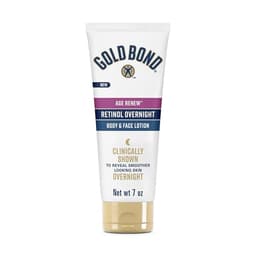
Gold Bond Age Renew Retinol Overnight Body & Face Lotion
The pick if fragrance is a dealbreaker, and it usually should be. Cheaper, fragrance-free, hypoallergenic and dermatologist-tested on the brand's own label, with niacinamide seventh and a peptide — and the brand explicitly states it is formulated and tested for facial use, which Medix does not. The catch is 7 oz against 15.
$11.97 · View on AmazonRead the full reviewPrice as of October 17, 2026. #ad How we’re funded
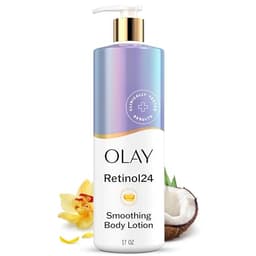
Olay Smoothing Body Lotion with Retinol Serum
More product for less money if volume is the whole reason you are here: 17 oz at drugstore pricing, with a lighter, faster-absorbing finish. A simpler formula with less behind the retinol, so buy it as a daily lotion with a retinol benefit rather than as a treatment.
$10.99 · View on AmazonPrice as of October 17, 2026. #ad How we’re funded
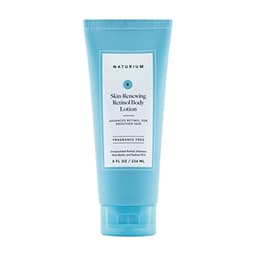
Naturium Skin-Renewing Retinol Body Lotion
The better-constructed base if you do not need fifteen ounces. A shea-butter lotion in 8 oz at roughly double the price per ounce, with no fragrance declared — buy it for how it behaves on the skin, not for a stronger dose, because neither brand publishes one.
$25.99 · View on AmazonRead the full reviewPrice as of October 17, 2026. #ad How we’re funded
Frequently asked questions
What percentage retinol is in Medix 5.5?
The brand does not publish a figure anywhere on its own product page, and nothing on the Amazon listing states one either. Retinol sits ninth in the published 36-ingredient list, which is high for a body lotion — but under 21 CFR 701.3 ingredients are ordered by predominance only above 1 percent, and every cosmetic retinoid is below that, so position nine cannot supply a dose. Anyone quoting you a percentage for this product has made it up.
Does the 5.5 in Medix 5.5 mean 5.5% retinol?
No, and this is the most consequential misreading in the category. The brand never explains the number anywhere on its own site. The product carries a 'pH Optimized' label with no value published, which is the likeliest reading, and 5.5% retinol would be several times the strongest cosmetic retinol sold anywhere. Treat 5.5 as part of the brand name and nothing more.
Is Medix 5.5 Retinol Body Lotion fragrance-free?
No. The brand's own published list contains Parfum/Fragrance twenty-fourth, and declares linalool, alpha-isomethyl ionone and limonene individually at the end — three fragrance materials named in their own right. The brand's 'No Added' badge covers parabens, mineral oil, dyes and PEGs, and conspicuously does not cover fragrance. There is a separate 'No Added Fragrance' version sold on the brand's own site.
Can you use Medix 5.5 Retinol Body Lotion on your face?
We would not. The brand's own directions are explicitly body-only — 'Skincare doesn't stop at your neck! Massage over your body daily, as needed' — with no facial-use statement anywhere, unlike some of its competitors. Combined with fragrance plus three declared fragrance materials, that is enough reason to keep it below the jawline. Buy a face retinol for your face.
Does it work on crepey skin?
Partly, and slowly. The emollient and silicone part of the formula improves how crepey skin looks immediately, which is real but temporary — the AAD's own wording is that a good moisturizer 'can plump up your skin, making fine lines and wrinkles less noticeable' and 'This result is temporary.' The retinoid part works on a far longer clock: the published histology for prescription tretinoin peaks at about ten months. Expect a same-day cosmetic improvement and a slow structural one.
Will it firm sagging skin?
No, and no lotion will. The AAD states plainly that a cream or lotion 'cannot penetrate the skin deeply enough' to lift sagging skin and that firming-cream results are 'subtle at best', with one exception it names itself: 'You may see a small change if a product contains a retinoid, such as retinol, which can help your body make more collagen.' A small change is the honest ceiling. Our sagging-skin page covers what actually tightens.
How long does a 15 oz bottle last?
That depends entirely on how much skin you are treating, and the published fingertip-unit figures are the way to reason about it: a leg and thigh is 5.8 units, an arm and forearm 3.3, the front of the trunk 6.7, where one unit covers roughly 286 cm². Arms and legs nightly will get through 15 oz in a couple of months. Two elbows will take the better part of a year — and a bottle open that long is a bottle degrading that long.
Is it any good for strawberry legs?
It is a reasonable choice for the plug-type versions on grounds of size and cost, which is why it appears on our strawberry legs page. The fragrance is a bigger drawback there than elsewhere, because legs are shaved and a disturbed barrier is more reactive — so if you shave regularly, a fragrance-free body retinol is the more sensible buy.
Sources
- Medix 5.5 — Retinol + Ferulic Acid Body Cream (brand product page) — The brand's own page for the product Amazon lists as 'Medix 5.5 Retinol Body Lotion Firming Moisturizer | Crepey Skincare Treatment'. The brand calls it 'Retinol + Ferulic Acid' and also 'Age Rewind Cream', sold in 15 oz (444 ml) and a 3 oz travel size. It publishes the full 36-ingredient list: aqua, cetyl alcohol, glycerin, DIMETHICONE 4th, shea butter 5th, ceteareth-20, FERULIC ACID 7th, dipotassium glycyrrhizate 8th, RETINOL 9th, caprylic/capric triglyceride 10th, aloe 13th, green tea leaf extract 14th, tocopherol 15th, chamomile 16th, apple, sunflower and rosemary extracts, phenoxyethanol 21st, PARFUM/FRAGRANCE 24th, and — at the end — LINALOOL 34th, alpha-isomethyl ionone 35th and LIMONENE 36th. So the product is NOT fragrance-free and declares three individual fragrance materials. Its label attributes are 'Dermatologist Tested', 'Not Tested on Animals', 'pH Optimized' and 'Made in Chicago', with a 'No Added' list of parabens, mineral oil, dyes and PEGs — which does not include fragrance. Claims are appearance-only ('Visibly smooths fine lines, wrinkles and crepey skin', 'Evens out the look of skin tone for a radiant glow', 'Visibly renews and restores skin's surface') with NO percentage, no sample size and no 'clinically shown' statement anywhere. Directions: 'Skincare doesn't stop at your neck! Massage over your body daily, as needed.' Retinol is described only as 'A powerhouse derivative of Vitamin A'. NO retinol concentration is stated, and the page never explains what the 5.5 in the brand name refers to or publishes a pH value. The page also carries the caveat 'Occasionally, ingredient lists may vary slightly between our website, packaging, and distributor websites', and the brand separately sells a 'Retinol + Ferulic Acid - No Added Fragrance' version. Cited for what the brand publishes about its own formula, never as evidence of efficacy (accessed October 17, 2026)
- U.S. FDA — 21 CFR 701.3, Designation of ingredients (eCFR) — The federal rule governing how a cosmetic ingredient list is ordered. Paragraph (a): 'The label on each package of a cosmetic shall bear a declaration of the name of each ingredient in descending order of predominance, except that fragrance or flavor may be listed as fragrance or flavor.' Paragraph (f) allows an alternative: ingredients 'present at a concentration greater than 1 percent, in descending order of predominance', followed by ingredients 'present at a concentration of not more than 1 percent, without respect to order of predominance', followed by color additives 'without respect to order of predominance'. Cited for the exact limit of what an ingredient's POSITION can tell a reader: late placement indicates the 1-percent-or-less group, but within that group the order carries no information about quantity (accessed September 26, 2026)
- American Academy of Dermatology — Retinoid or retinol? — AAD on the difference between prescription retinoids and OTC retinol (accessed July 17, 2026)
- Voorhees JJ — Clinical effects of long-term therapy with topical tretinoin and cellular mode of action (J Int Med Res, 1990) — Double-blind, placebo-controlled study: 0.1% topical tretinoin reduced the effects of photoageing maximally after 10 months, with no further improvement between 10 and 22 months. Histologically it induced 'epidermal hyperplasia, compaction of the stratum corneum and the deposition of ultrastructurally visible collagen fibrils in the papillary dermis', reduced the number and activity of melanocytes, and significantly increased mitoses (accessed September 18, 2026)
- Griffiths CE et al. — Restoration of collagen formation in photodamaged human skin by tretinoin (N Engl J Med, 1993) — Biopsies from 26 subjects plus 29 patients treated 10 to 12 months with daily 0.1% tretinoin cream (15 patients) or vehicle (14). Collagen I formation was 56% LOWER in photodamaged skin than in sun-protected buttock skin (P < 0.001); tretinoin produced an 80% INCREASE in collagen I formation against a 14% decrease on vehicle (P = 0.006). Prescription tretinoin, not cosmetic retinol — cited for the direction of the effect on dermal collagen (accessed September 18, 2026)
- American Academy of Dermatology — Eczema types: Contact dermatitis causes — AAD names fragrance among the most common causes of allergic contact dermatitis, and notes the rash can take hours or days to appear (accessed August 19, 2026)
- American Academy of Dermatology — How can I find eczema friendly products? — AAD sets out the difference between the labels: unscented means a fragrance is masked so you cannot smell it, fragrance-free means the product contains no fragrance at all (accessed August 19, 2026)
- American Academy of Dermatology — Many ways to firm sagging skin — The AAD's own consumer page on skin tightening, and the clearest published statement of what a topical can and cannot do about laxity. On creams: 'If you're looking for facelift-like results from a jar, you'll likely be disappointed', 'Despite the claims, the results you see from a skin-firming cream will be subtle at best', and a cream or lotion 'cannot penetrate the skin deeply enough' to lift sagging skin — while 'A good moisturizer can plump up your skin, making fine lines and wrinkles less noticeable. This result is temporary.' On retinoids specifically: 'You may see a small change if a product contains a retinoid, such as retinol, which can help your body make more collagen.' It then lists the procedures that do tighten, with the AAD's own timelines: ultrasound, 'With 1 treatment, most people see modest lifting and tightening within 2 to 6 months'; non-invasive radiofrequency, best results 'in about 6 months' and 'Results can last 2 to 3 years'; laser treatment, '3 to 5 treatments' with results 'between 2 and 6 months'; minimally invasive radiofrequency, 'gradual tightening and lifting for close to 1 year'; laser resurfacing, the 'Most effective procedure for tightening loose skin'; and 'A surgical lift, such as a facelift or eyelid surgery, will give you the most dramatic results.' On candidacy it advises being at a healthy weight, eating a healthy diet, quitting smoking, drinking little alcohol, protecting skin from the sun and never tanning indoors, and having 'a small amount of sagging skin' — adding 'Do you have lots of sagging skin? If so, skin-tightening may not be helpful.' Cited for the published limit on topicals and for what the real treatments for laxity are (accessed October 3, 2026)
- Long CC, Finlay AY — The finger-tip unit: a new practical measure (Clin Exp Dermatol, 1991) — The paper that defined the fingertip unit. Thirty adult patients treated various body regions; the number of FTUs required was face and neck 2.5, front of trunk 6.7, back of trunk 6.8, arm and forearm 3.3, hand 1.2, leg and thigh 5.8, foot 1.8. One FTU covers 286 cm2 (s.d. 80) — 312 cm2 in males, 257 cm2 in females. It is a dermatological DOSING measure for ointments, not a retinol instruction, and is cited here only as the published way to reason about how much topical product an area takes (accessed September 18, 2026)
- Temova Rakuša Ž, Škufca P, Kristl A, Roškar R — Retinoid stability and degradation kinetics in commercial cosmetic products (J Cosmet Dermatol, 2021) — Validated HPLC-UV study of 16 retinoid derivatives (retinol, retinyl palmitate, beta-carotene and hydroxypinacolone retinoate) in 12 commercial cosmetics over 6 months of long-term and accelerated stability testing plus a one-week photostability study. Retinoid degradation followed first-order kinetics; the products showed a 0%-80% decline after 6 months at 25 °C and a 40%-100% decline at 40 °C; 'light degradation was more pronounced than temperature-induced degradation'; instabilities were 'formulation-dependent and associated with lower contents than declared in some cosmetics'. Cited for the size of the stability problem a sealed single-dose format is built to solve — the study did not test this product (accessed September 19, 2026)
- Ferulic acid stabilizes a solution of vitamins C and E and doubles its photoprotection (PubMed) — Lin et al. — the L-ascorbic acid + vitamin E + ferulic acid evidence (accessed July 17, 2026)
- American Academy of Dermatology — How to apply sunscreen — AAD on how much sunscreen to use (about a teaspoon for the face) and reapplying every two hours (accessed August 11, 2026)
Keep reading
Best retinol body lotions
The whole category ranked, where this lotion sits on cost per ounce and where the better-constructed formulas sit on everything else.
See the picksRetinol for strawberry legs
Four causes of one dotted shin, the two free tests that tell them apart, and why size is the criterion that decides this category.
See the picksRetinol for crepey skin
The complaint this lotion is sold for, with the honest split between what the emollients do today and what the retinoid does over months.
See the picksGold Bond Age Renew Retinol review
The fragrance-free alternative, reviewed against its own 45-ingredient list — and the cheapest well-constructed formula on the site.
Read the reviewRetinol percentages explained
What the numbers mean, what an ingredient position can and cannot prove, and what to do when a brand prints nothing at all.
Read the guide