RoC Retinol Correxion Eye Cream Review
The default drugstore retinol eye cream, and a reasonable one — dosed for thin skin, cheap, everywhere. Two caveats that matter more here than on a face product: the strength is unstated, and it contains fragrance.
How this is funded: we earn a commission if you buy through our links, at no extra cost to you. It never changes which product we recommend, and we’ll tell you when we’d skip one. Full disclosure.
The reference drugstore retinol eye cream — a retinol formulation made specifically for the thinner skin around the eyes, aimed at crow's-feet and under-eye lines. Widely available and inexpensive, though the strength isn't stated.
Strengths
- Formulated at an eye-appropriate strength for delicate skin
- Long track record for the eye area specifically
- Inexpensive and easy to find
Trade-offs
- Retinol strength not published
- Contains fragrance — patch-test near the eye first
| Key active | Retinol |
|---|---|
| Stated concentration | Not published |
| Format | Light eye cream |
| Fragrance-free | No |
| Best for | Crow's-feet and under-eye lines on a budget |
Formulation note. Retinol in a formula dosed for the thin skin around the eyes. Eye-area retinol is intentionally milder than face retinol; the exact figure is undisclosed.
Ingredients and claims read from the product listing, on July 18, 2026. “Not published” means the brand does not state that figure.
If you asked a hundred people to name a retinol eye cream, most would name this one. It has been on drugstore shelves for years, it is inexpensive, and it is aimed squarely at the complaint people bring to this category: crow’s-feet and the fine crepey lines under the eye.
As a default, it is defensible. As a purchase, it deserves two questions that the packaging does not answer.
What an eye-area retinol is actually for
The skin around the eye is thinner than facial skin, moves constantly, and has less sebaceous support. Those facts drive the whole product category: eye retinols are formulated at lower doses than face retinols, in bases designed for a small area applied sparingly.
That answers the perennial question of whether an eye cream is a scam. It is not exactly, but the honest framing is that you are buying a milder dose in a smaller container rather than a fundamentally different technology. Plenty of people use a gentle face retinol around the orbital bone with no trouble at all, and our under-eye guide covers how to do that safely.
The case for buying the dedicated product is risk reduction on skin where a mistake is genuinely uncomfortable. The case against is cost per milliliter. Both are reasonable.
The dark circles question
This is where expectations need managing, because it is the most-searched reason people buy an eye cream and the one where the answer is most conditional. “Dark circles” describes at least three unrelated problems:
- Thin skin showing vasculature. A retinoid has a real mechanism here — improving texture and thickness over months makes what is underneath less visible. Slow, partial, genuine.
- Pigmentation. Genetic or post-inflammatory darkening of the skin itself. A retinoid contributes little, and sun protection contributes more.
- Shadow. A hollow under the orbital rim casting a shadow. No topical product changes bone structure or fat pad volume. Nothing on this shelf will help.
Most people have a mix, which is exactly why reviews of every eye cream in this category range from transformative to useless. Work out which one you have before deciding whether the product failed.
The two caveats
The strength is not published
RoC does not state a figure, so our spec table prints Not published. This is normal for the brand — the same is true of the face cream, as our night cream review notes — and it is normal for the drugstore shelf generally.
It matters slightly less here than on a face product, because you would not be choosing between eye-area strengths anyway. It still means you cannot tell whether a comfortable experience reflects your tolerance or a very small dose, and it means you cannot compare this against the next eye cream you try. Our strength guide covers the wider problem.
It contains fragrance
This is the one we would weigh more heavily. Our product data records fragrance-free as no. The AAD names fragrance among the most common causes of allergic contact dermatitis and notes that the resulting rash can take hours or days to appear.
On a face product that is a manageable risk. On the eye area — thinner skin, a place where a reaction is highly visible and slow to settle — it is a genuine mark against the product, particularly when fragrance-free retinols exist for the rest of the face. Patch test on the outer corner for several nights before using it properly. Our fragrance-free roundup covers the label distinction between fragrance-free and unscented.
Who it suits
People with crow’s-feet and fine under-eye lines who want to try a retinoid on the area without spending much, and who know they do not react to fragrance. That is a large group and this is a sensible purchase for them.
It also suits anyone nervous about using their face retinol near the eye. A lower dose in a product designed for the job is a reasonable way to buy peace of mind, even if it is not strictly necessary.
Who should skip it
Anyone with fragrance sensitivity or reactive skin, for the reason above.
Anyone whose main complaint is pigmentation or hollowing rather than texture — see the dark circles section. A retinoid is the wrong tool and a disappointing result is close to guaranteed.
And anyone already using a gentle face retinol comfortably who applies it carefully around the orbital bone. You may not need this at all, and our under-eye guide explains how to extend what you already own.
How to use it
At night, on clean and completely dry skin. A very small amount — less than a grain of rice for both eyes — patted gently along the orbital bone. Not on the lid, not close to the lash line: product migrates upward with warmth and blinking, and applying it too close effectively treats your eyelid overnight.
Twice a week to start, building slowly. Moisturizer over the top if the area feels tight. Stop entirely if you get stinging, swelling or a rash rather than mild dryness — that is the fragrance-reaction pattern and it is not something to push through. Sunscreen every morning, and sunglasses do more for crow’s-feet than most people credit.
The verdict
A perfectly reasonable, inexpensive, widely available eye retinol that will do a modest amount for fine lines and crepiness over months. The reference product in its category, and the one most people should try first if they are set on a dedicated eye cream.
Two things keep it from a stronger recommendation: an unstated dose, which is the category norm, and added fragrance on the most reaction-prone skin on the face, which is not. If you know fragrance is fine for you, buy it. If you do not know, patch test properly before you find out on your eyelid.
General guidance, not medical advice. Retinol Room is written by an enthusiast, not a dermatologist. For a diagnosis, a reaction, or a prescription active like tretinoin, see a qualified professional. Introduce any new active slowly and patch-test first.
If it’s not the one, consider these
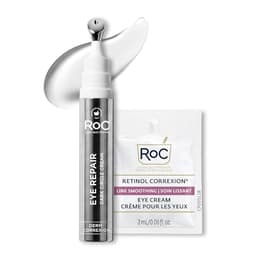
RoC Derm Correxion Retinol Eye Repair Cream
RoC's step up — retinol with niacinamide for tone as well as texture, if crepiness and discoloration are both on the list.
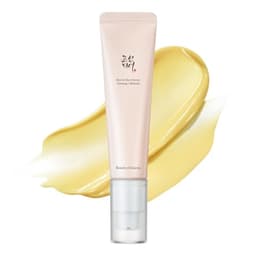
Beauty of Joseon Revive Eye Serum with Retinal & Niacinamide
Retinal with niacinamide in a lighter serum format, if you would rather have the more potent molecule around the eyes.
$17.00 · View on AmazonRead the full reviewPrice as of October 4, 2026. #ad How we’re funded
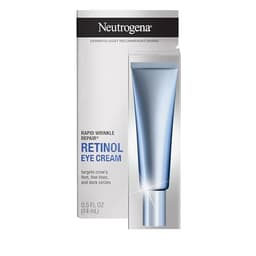
Neutrogena Rapid Wrinkle Repair Retinol Eye Cream
The other drugstore reference product, with a moisturizing base and the same unstated-strength caveat.
Frequently asked questions
Does RoC eye cream work for dark circles?
It depends entirely on what is causing yours. Retinol can help where thin, crepey skin is letting underlying vessels show through, because it improves texture and thickness over months. It does nothing for pigmentation-driven circles, nothing for shadows cast by the orbital bone, and nothing for puffiness. Most people have some combination, which is why results here are so inconsistent.
What strength is RoC Retinol Correxion eye cream?
Not published. RoC does not state a figure for this product, so our spec table prints 'Not published'. What we can say is that eye-area retinol is generally dosed lower than face retinol by design, because the skin there is thinner and more reactive.
Can I just use my face retinol around my eyes?
Many people do, carefully, and a purpose-made eye product is not strictly necessary. The argument for one is dose: eye formulas are typically milder, which reduces the risk of stinging and irritation on skin that is markedly thinner. The argument against is cost per milliliter, which in this category is high.
Does it contain fragrance?
Yes, and this is the caveat we would weigh most heavily. The AAD names fragrance among the most common causes of allergic contact dermatitis, and the eye area is where a reaction is least welcome and hardest to hide. Patch test on the outer eye area before committing.
How much should I use?
Much less than you think — a small amount patted along the orbital bone, not the lid, not the lash line. Product migrates upward with body heat and blinking, so applying close to the lash line effectively puts a retinoid on your eyelid overnight. Start twice a week.
Will it help with milia?
Possibly, indirectly. Milia are small keratin cysts, and retinoids increase turnover, which is why they are sometimes suggested. It is not a treatment with strong evidence for this specific complaint, and persistent milia are best removed by a professional rather than pursued with a cream.
Is 15 ml enough?
For an eye area, yes — comfortably several months at a correctly small dose. The cost per milliliter is high in absolute terms, which is true of the whole eye-cream category, but the actual monthly cost is low because you are treating a very small area.
Sources
- American Academy of Dermatology — Retinoid or retinol? — AAD on the difference between prescription retinoids and OTC retinol (accessed July 17, 2026)
- American Academy of Dermatology — Eczema types: Contact dermatitis causes — AAD names fragrance among the most common causes of allergic contact dermatitis, and notes the rash can take hours or days to appear (accessed August 19, 2026)
- Human Skin Aging and the Anti-Aging Properties of Retinol (PubMed) — Review of topical retinol's effect on collagen and photoaging (accessed July 17, 2026)
- American Academy of Dermatology — Wrinkle remedies — AAD on which over-the-counter approaches to lines have support and which do not (accessed August 11, 2026)
- Moisturizers — StatPearls (NCBI Bookshelf) — Reference on humectants (hyaluronic acid), occlusives and emollients (accessed July 17, 2026)
Keep reading
Best retinol eye creams
The full eye-cream field, compared on base, dose and what each is actually for.
See the picksRetinol for under-eyes
Crow's-feet, crepey texture and dark circles are three problems — retinol answers some.
Read the guideRoC Retinol Correxion night cream, reviewed
The face product from the same line, and how the two differ beyond jar size.
Read the reviewBest fragrance-free retinol
Why the fragrance caveat matters, and the face products where it doesn't apply.
See the picks