Neutrogena Rapid Wrinkle Repair Eye Cream Review
Half an ounce of accelerated-retinol eye cream at a drugstore price, and the most-bought retinol eye cream in America. Also the one where we had to correct our own spec table: the brand states nothing about fragrance here, while stating it plainly on the Pro+ version sitting next to it.
How this is funded: we earn a commission if you buy through our links, at no extra cost to you. It never changes which product we recommend, and we’ll tell you when we’d skip one. Full disclosure.
Neutrogena's accelerated-retinol eye cream with hyaluronic acid and glucose complex, targeting fine lines and dark circles. A convenient, well-priced pick — with the usual drugstore caveat of an unstated strength.
Strengths
- Hyaluronic acid + glucose complex for hydration
- Made specifically for the eye area
- Inexpensive and widely stocked
Trade-offs
- Strength not published
- Fragrance status not published either — the listing is silent and the brand page cannot be read
| Key active | Retinol (accelerated retinol SA blend) |
|---|---|
| Stated concentration | Not published |
| Format | Light eye cream |
| Fragrance-free | Not published |
| Best for | Fine lines and dark circles, everyday use |
Formulation note. Neutrogena's retinol SA blend + hyaluronic acid + glucose complex, dosed for the eye area. Hydrating and convenient; the retinol figure is undisclosed. Fragrance status is undisclosed for this one too — the listing makes no claim either way and the brand page cannot be read, which is why the spec table prints 'Not published' where its Pro+ sibling prints 'Yes'.
Ingredients and claims read from the product listing, on November 7, 2026. “Not published” means the brand does not state that figure.
What the listing states, and what it leaves out
This is the best-selling retinol eye cream in the American drugstore aisle, and the documentation behind it is thin. We re-pulled the listing record on November 7, 2026 — In Stock, live price — and this is what it commits to:
Neutrogena Rapid Wrinkle Repair Retinol Eye Cream, 0.5 fl. oz | For Dark Circles, Anti-Aging Under Eye Cream, Retinol & Hyaluronic Acid, Fine Lines Wrinkles & Dark Spots
Retinol, hyaluronic acid, half an ounce, and four things it is aimed at. That is the spec sheet. No percentage. And — the detail that made us revisit this product — no fragrance claim in either direction.
A correction to our own spec table
We print this because the site’s whole premise is reading labels properly, and we had this one wrong. Our registry recorded this eye cream as containing fragrance, and carried “Contains fragrance” as a stated drawback. Re-checking it, that value traced back to the site’s launch batch with no source recorded against it. The listing says nothing about fragrance either way, and Neutrogena’s own product page returns an error to a direct fetch, so there is no published formula to read.
So the spec table now prints “Not published” for this product rather than “No”. Asserting a fragrance we cannot evidence is the same failure as asserting its absence — it just happens to err in the direction that looks more cautious. “We do not know” is the accurate answer.
The same check turned up the opposite error on the sibling product. The Pro+ eye cream states “Formulated without Fragrance, Dyes, Phthalates, and Parabens” in its own listing title, and Neutrogena’s product URL for it ends “fragrance-free” — and our table had been printing “No” for that one too. It now reads “Yes”, on the brand’s own words.
Which leaves a genuinely useful finding for a buyer: within one brand, in one line, on the same shelf, one eye cream publishes a fragrance-free claim and the other does not. If fragrance is something you avoid on purpose, that is the whole decision, and it points at the Pro+.
What “accelerated Retinol SA” means and does not mean
Neutrogena markets its retinol as an accelerated Retinol SA blend and says it uses pure retinol rather than retinyl esters. That second point is worth something: retinyl esters sit further from retinoic acid in the conversion chain and are the weaker end of the retinoid family, so a brand specifying pure retinol is telling you the molecule is a real one. Our retinol vs retinyl palmitate page covers why that distinction matters.
What neither “accelerated” nor “SA” tells you is the dose. They are statements about form and delivery, not quantity, and no amount of brand vocabulary substitutes for a number. The federal rule on cosmetic ingredient lists orders ingredients by predominance only above one percent, and every cosmetic retinoid sits below that line — so even a complete list, which we do not have here, would not yield a percentage.
The hyaluronic acid is the other named active and its job here is straightforward: hold water in a very thin, very mobile piece of skin while the retinoid speeds its turnover. On the eye area that is more than cosmetic — dryness is what makes fine lines read as deeper than they are.
What a retinoid can and cannot do around the eye
The listing names four targets. They are not equally reachable, and separating them is the most useful thing this review can do.
Fine lines and crepey texture: yes, slowly.This is the retinoid’s home ground. The histology on prescription tretinoin found epidermal thickening and compaction of the stratum corneum, and the collagen work — formation around 56% lower in severely photodamaged skin, rising roughly 80% on ten to twelve months of daily use — describes the mechanism. That is prescription dose on facial skin, so read it as direction rather than magnitude for an undisclosed cosmetic dose.
Dark spots: plausibly.Pigment responds to increased turnover, and this is the more realistic of the two “dark” claims on the label.
Dark circles: depends entirely on what is causing them, and the label does not distinguish. Pigment and light-scattering texture, a retinoid can work on. A hollow beneath the orbital bone, or the blue of vessels under thin skin, it cannot. Our under-eyes page sorts those apart properly.
Eye bags and hooding: no. These are fat, fluid and structure. The AAD states plainly that a cream cannot penetrate deeply enough to lift sagging skin and that firming results are subtle at best. No eye cream at any price changes an anatomical contour.
And the myth worth killing in the place it frightens people most: retinol does not thin eyelid skin.The published histology shows thickening, and in the study pairing a retinoid with a topical steroid the retinoid offset the steroid’s atrophy rather than compounding it. Eyelid skin is genuinely the thinnest on the body and it reacts more than the cheek does — but that is a dose-and-placement problem, not a thinning one.
How to actually run it
- Apply to the orbital bone, not the lid. Pat along the bone from the outer corner inward. Product migrates upward overnight on its own; you do not need to help it.
- A dab is the dose. The fingertip-unit figures put the whole face and neck at about 2.5 units, so the orbital area is a fraction of one. Over-application is the single commonest cause of a reaction here.
- Two or three nights a week to start, building up. You have no percentage to reason from, so your skin is the only instrument you have.
- Moisturizer after, sunscreen in the morning. A retinoid raises sun sensitivity while skin adjusts, and the orbital area gets daylight all year.
- Judge it at ten months. Texture first, lines later, and nothing dramatic at any point.
On storage: the validated stability work on retinoid derivatives in commercial cosmetics found losses of 0% to 80% over six months at 25 °C and 40% to 100% at 40 °C, light worse than heat. A small jar you will take many months to finish belongs in a drawer rather than on a bathroom windowsill. Neutrogena publishes no stability data of its own, as none of them do.
Side effects, and which ones mean stop
The eye area is where retinoid reactions are most common and most alarming, so it is worth separating the adjustment from the problem.
Expected, in the first two to three weeks: mild dryness, a little flaking along the orbital bone, a tight feeling, perhaps some pinkness. Turnover has sped up and the barrier is catching up. The fix is frequency and moisturizer, not quitting — drop to two nights a week and moisturize the area first if you need to.
Not expected, and worth acting on: swollen or puffy lids, stinging that does not settle within minutes, a rash that spreads beyond where you applied it, or anything appearing a day or two after application rather than immediately. That delayed pattern is the signature of allergic contact dermatitis rather than retinoid irritation — the AAD notes the reaction can take hours or days to appear — and fragrance is among its commonest causes. Which is precisely why the undisclosed fragrance status of this particular product is more than a pedantic complaint: if you react at day two, you cannot rule the base in or out.
Stop and see someone if there is eyelid swelling that affects your vision, weeping or crusting, or pain rather than discomfort. Those stop being skincare questions. Our retinol burn guide covers the recovery sequence, and the eyelid guide covers what to do if product got onto the lid itself.
What to expect, and when
Weeks one to four: possible dryness as described above, and nothing visible in the mirror. Weeks four to twelve: texture first — the crepey, light-scattering quality of the skin smooths before any line changes shape, and because dryness exaggerates fine lines, some of the early improvement is the hyaluronic acid rather than the retinoid. Months three to ten: fine lines soften, if they are going to. The published record puts the peak effect at around ten months of daily use with no further gain out to twenty-two, so a year is the fair test and anything you are told about two weeks is marketing.
One caution specific to an undisclosed dose: because you have no percentage, you cannot tell whether a disappointing result at month ten means the product is weak or your application was. Use enough, use it consistently, and if nothing has changed in a year, step to a product that prints a number rather than buying a second jar of this.
Who should buy it, and who should not
Buy it if you want an inexpensive, widely stocked, eye-dosed retinoid and your main complaint is fine lines or crepey texture rather than a shadow or a bag. It is competent, it is cheap, it is everywhere, and buying a product dosed for the eye area is more sensible than borrowing a face serum for it.
Do not buy it if you avoid fragrance — not because it is known to contain any, but because nobody will tell you, and the Pro+ version on the same shelf settles the question in its own title. Do not buy it if you want a number, because this brand does not print one anywhere in the line. And do not buy it for eye bags or hooded lids; that is a consultation, not a cream.
The verdict
A reasonable product with poor disclosure, and the clearest example on this site of why that distinction matters. The formula is sensible for the area, the pure-retinol specification is better than the retinyl-ester alternative, and the price makes the ten-month commitment a retinoid actually needs genuinely affordable.
But it is outdone on transparency by its own sibling. If you are choosing between the two Neutrogena eye creams, the Pro+ tells you something about fragrance that this one will not, and that is the more informative label even though neither prints a dose. If what you want is a brand that publishes the whole formula and the molecule, the Beauty of Joseon retinal eye serum does both for similar money.
General guidance, not medical advice. Retinol Room is written by an enthusiast, not a dermatologist. For a diagnosis, a reaction, or a prescription active like tretinoin, see a qualified professional. Introduce any new active slowly and patch-test first.
If it’s not the one, consider these
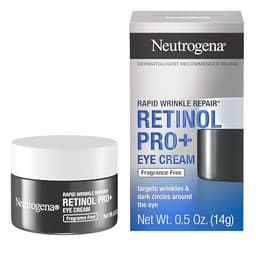
Neutrogena Rapid Wrinkle Repair Pro+ Retinol Eye Cream
The same brand's step-up, and the one to buy if fragrance matters to you: its listing title states "Formulated without Fragrance, Dyes, Phthalates, and Parabens", which this one does not. Positioned as higher potency, though "Pro+" is branding rather than a number — Neutrogena publishes no percentage for either. Note it returned a live price but no stock confirmation when we last checked, so check availability before committing.
$23.05 · View on AmazonPrice as of November 21, 2026. #ad How we’re funded
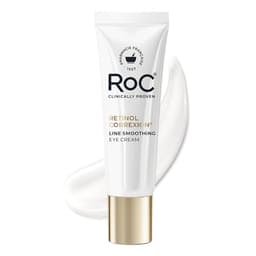
RoC Retinol Correxion Under Eye Cream
The direct drugstore rival and the site's overall eye-cream pick, at a similar price in the same 0.5 oz size. Marketed specifically at dark circles and puffiness rather than fine lines. Neither brand publishes a strength, so this comes down to which target wording matches your actual complaint.
Read the full review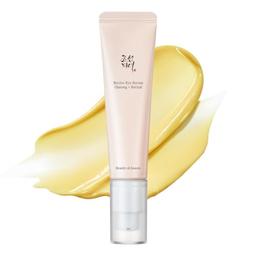
Beauty of Joseon Revive Eye Serum with Retinal & Niacinamide
The upgrade on disclosure rather than price: retinal rather than retinol, with niacinamide, and a fragrance-free claim the brand actually makes and publishes a full ingredient list behind. A serum texture rather than a cream, and the pick if the undisclosed-everything of the drugstore aisle is what bothers you.
Read the full review
Frequently asked questions
What percentage retinol is in Neutrogena Rapid Wrinkle Repair eye cream?
Neutrogena does not publish one, for this eye cream or for any product in the Rapid Wrinkle Repair line. The listing names retinol and hyaluronic acid and states no figure, and the brand's own product page cannot be read directly. What the brand does say about its retinol generally is that it uses pure retinol rather than retinyl esters, and it markets the blend as "accelerated" Retinol SA — both of which are statements about form, not dose. Any site quoting you a percentage for this product invented it.
Is Neutrogena Rapid Wrinkle Repair eye cream fragrance-free?
Not established, and we changed our own answer on this. The listing makes no fragrance claim in either direction and Neutrogena's product page returns an error to a direct fetch, so there is nothing to read — we now print "Not published" where we previously printed "No", because asserting a fragrance we cannot evidence was wrong. If fragrance-free is what you need, the Pro+ version of this eye cream states "Formulated without Fragrance, Dyes, Phthalates, and Parabens" in its own listing title, and that is the one to buy.
Neutrogena Rapid Wrinkle Repair eye cream vs RoC — which is better?
They are close enough that the marketing wording is the most useful tiebreaker, because neither brand publishes a strength. Neutrogena aims this one at fine lines, wrinkles and dark spots with retinol plus hyaluronic acid; RoC's Retinol Correxion eye cream is sold specifically at dark circles and puffiness. Same 0.5 oz size, similar drugstore pricing. Buy the one whose stated target matches your actual complaint, and do not read either as stronger — there is no published comparison between them.
Does retinol thin the skin around the eyes?
No, and the published histology points the other way. Topical tretinoin was found to produce epidermal thickening and compaction of the stratum corneum, and in the study pairing it with a topical steroid the retinoid offset the steroid-induced atrophy rather than adding to it. The eyelid skin is genuinely the thinnest on the body and it does react more than the cheek, which is why dose and placement matter here — but thinning is not the mechanism, and our guide on retinol and eyelids covers where to apply it.
Will it get rid of dark circles or eye bags?
Partly for one kind, not at all for the others, and the listing's wording oversells it. A retinoid can help where the darkness is pigment or where crepey texture is scattering light. Where the shadow comes from a hollow under the orbital bone or from fat and fluid sitting forward, it cannot — those are structural, and the AAD is explicit that a cream cannot penetrate deeply enough to lift sagging skin. If you can make the shadow move by changing the light on your face, it is structural and no eye cream will touch it.
How much should I use, and where?
Less than you think, and on the bone rather than the lid. The fingertip-unit figures put the entire face and neck at about 2.5 units, so the orbital area is a fraction of a single unit — a dab, patted along the orbital bone from the outer corner inward, not smoothed across the eyelid. Two or three nights a week to begin with. A 0.5 oz jar used that way lasts a long time, which is the practical argument for an eye-specific product over borrowing your face serum.
Sources
- Neutrogena Rapid Wrinkle Repair Retinol Eye Cream — Amazon listing (Creators API record) — The listing record for ASIN B004D24818, re-pulled through the Amazon Creators API on November 7, 2026: title "Neutrogena Rapid Wrinkle Repair Retinol Eye Cream, 0.5 fl. oz | For Dark Circles, Anti-Aging Under Eye Cream, Retinol & Hyaluronic Acid, Fine Lines Wrinkles & Dark Spots", availability "In Stock", live price returned. Cited for what the listing DOES state — retinol plus hyaluronic acid, 0.5 fl oz, dark circles and fine lines as the target — and, as importantly, for what it does NOT: no retinol percentage, and no fragrance claim in either direction. Neutrogena's own product page returns 403 to a direct fetch, so this site records the fragrance status of this particular eye cream as "Not published" rather than asserting either way, and the earlier registry value of "contains fragrance" was removed as an unsourced affirmative claim (accessed November 7, 2026)
- Neutrogena Rapid Wrinkle Repair Retinol Pro+ Anti-Wrinkle Eye Cream — Amazon listing (Creators API record) — The listing record for ASIN B0B2TH7C4H, re-pulled through the Amazon Creators API on November 7, 2026. Title, verbatim: "Neutrogena Rapid Wrinkle Repair Retinol Pro+ Anti-Wrinkle Eye Cream, 0.5 oz | Targeted Eye Cream for Wrinkles & Dark Circles, Formulated without Fragrance, Dyes, Phthalates, and Parabens". Cited as the evidence that this product IS fragrance-free — the claim is in the listing title itself, and Neutrogena's own product URL for it ends `...-retinol-pro-eye-cream-fragrance-free/`. It corrects a registry value that had recorded the opposite since the 2026-07-18 launch batch with no provenance. The listing returned a live price but an EMPTY availability string on that date, which is why this site does not make it a headline pick. It states no retinol percentage: "Pro+" is branding, not a number (accessed November 7, 2026)
- U.S. FDA — 21 CFR 701.3, Designation of ingredients (eCFR) — The federal rule governing how a cosmetic ingredient list is ordered. Paragraph (a): 'The label on each package of a cosmetic shall bear a declaration of the name of each ingredient in descending order of predominance, except that fragrance or flavor may be listed as fragrance or flavor.' Paragraph (f) allows an alternative: ingredients 'present at a concentration greater than 1 percent, in descending order of predominance', followed by ingredients 'present at a concentration of not more than 1 percent, without respect to order of predominance', followed by color additives 'without respect to order of predominance'. Cited for the exact limit of what an ingredient's POSITION can tell a reader: late placement indicates the 1-percent-or-less group, but within that group the order carries no information about quantity (accessed September 26, 2026)
- American Academy of Dermatology — Retinoid or retinol? — AAD on the difference between prescription retinoids and OTC retinol (accessed July 17, 2026)
- Human Skin Aging and the Anti-Aging Properties of Retinol (PubMed) — Review of topical retinol's effect on collagen and photoaging (accessed July 17, 2026)
- Griffiths CE et al. — Restoration of collagen formation in photodamaged human skin by tretinoin (N Engl J Med, 1993) — Biopsies from 26 subjects plus 29 patients treated 10 to 12 months with daily 0.1% tretinoin cream (15 patients) or vehicle (14). Collagen I formation was 56% LOWER in photodamaged skin than in sun-protected buttock skin (P < 0.001); tretinoin produced an 80% INCREASE in collagen I formation against a 14% decrease on vehicle (P = 0.006). Prescription tretinoin, not cosmetic retinol — cited for the direction of the effect on dermal collagen (accessed September 18, 2026)
- McMichael AJ et al. — Concurrent application of tretinoin partially protects against corticosteroid-induced epidermal atrophy (Br J Dermatol, 1996) — Eight-week study in 20 psoriasis patients, each treated on one plaque with betamethasone dipropionate plus 0.1% tretinoin and on another with the steroid plus vehicle. Light microscopy showed a 19% REDUCTION in epidermal thickness in steroid-only perilesional skin against a slight 1% INCREASE where tretinoin was applied with it (P = 0.067); procollagen I aminopropeptide fell 55% on steroid alone versus 45% with tretinoin. Cited for the contrast between the drug class that does thin skin and the one people confuse it with (accessed September 18, 2026)
- Voorhees JJ — Clinical effects of long-term therapy with topical tretinoin and cellular mode of action (J Int Med Res, 1990) — Double-blind, placebo-controlled study: 0.1% topical tretinoin reduced the effects of photoageing maximally after 10 months, with no further improvement between 10 and 22 months. Histologically it induced 'epidermal hyperplasia, compaction of the stratum corneum and the deposition of ultrastructurally visible collagen fibrils in the papillary dermis', reduced the number and activity of melanocytes, and significantly increased mitoses (accessed September 18, 2026)
- American Academy of Dermatology — How can I find eczema friendly products? — AAD sets out the difference between the labels: unscented means a fragrance is masked so you cannot smell it, fragrance-free means the product contains no fragrance at all (accessed August 19, 2026)
- American Academy of Dermatology — Eczema types: Contact dermatitis causes — AAD names fragrance among the most common causes of allergic contact dermatitis, and notes the rash can take hours or days to appear (accessed August 19, 2026)
- Long CC, Finlay AY — The finger-tip unit: a new practical measure (Clin Exp Dermatol, 1991) — The paper that defined the fingertip unit. Thirty adult patients treated various body regions; the number of FTUs required was face and neck 2.5, front of trunk 6.7, back of trunk 6.8, arm and forearm 3.3, hand 1.2, leg and thigh 5.8, foot 1.8. One FTU covers 286 cm2 (s.d. 80) — 312 cm2 in males, 257 cm2 in females. It is a dermatological DOSING measure for ointments, not a retinol instruction, and is cited here only as the published way to reason about how much topical product an area takes (accessed September 18, 2026)
- Moisturizers — StatPearls (NCBI Bookshelf) — Reference on humectants (hyaluronic acid), occlusives and emollients (accessed July 17, 2026)
- American Academy of Dermatology — Many ways to firm sagging skin — The AAD's own consumer page on skin tightening, and the clearest published statement of what a topical can and cannot do about laxity. On creams: 'If you're looking for facelift-like results from a jar, you'll likely be disappointed', 'Despite the claims, the results you see from a skin-firming cream will be subtle at best', and a cream or lotion 'cannot penetrate the skin deeply enough' to lift sagging skin — while 'A good moisturizer can plump up your skin, making fine lines and wrinkles less noticeable. This result is temporary.' On retinoids specifically: 'You may see a small change if a product contains a retinoid, such as retinol, which can help your body make more collagen.' It then lists the procedures that do tighten, with the AAD's own timelines: ultrasound, 'With 1 treatment, most people see modest lifting and tightening within 2 to 6 months'; non-invasive radiofrequency, best results 'in about 6 months' and 'Results can last 2 to 3 years'; laser treatment, '3 to 5 treatments' with results 'between 2 and 6 months'; minimally invasive radiofrequency, 'gradual tightening and lifting for close to 1 year'; laser resurfacing, the 'Most effective procedure for tightening loose skin'; and 'A surgical lift, such as a facelift or eyelid surgery, will give you the most dramatic results.' On candidacy it advises being at a healthy weight, eating a healthy diet, quitting smoking, drinking little alcohol, protecting skin from the sun and never tanning indoors, and having 'a small amount of sagging skin' — adding 'Do you have lots of sagging skin? If so, skin-tightening may not be helpful.' Cited for the published limit on topicals and for what the real treatments for laxity are (accessed October 3, 2026)
- American Academy of Dermatology — How to apply sunscreen — AAD on how much sunscreen to use (about a teaspoon for the face) and reapplying every two hours (accessed August 11, 2026)
- Temova Rakuša Ž, Škufca P, Kristl A, Roškar R — Retinoid stability and degradation kinetics in commercial cosmetic products (J Cosmet Dermatol, 2021) — Validated HPLC-UV study of 16 retinoid derivatives (retinol, retinyl palmitate, beta-carotene and hydroxypinacolone retinoate) in 12 commercial cosmetics over 6 months of long-term and accelerated stability testing plus a one-week photostability study. Retinoid degradation followed first-order kinetics; the products showed a 0%-80% decline after 6 months at 25 °C and a 40%-100% decline at 40 °C; 'light degradation was more pronounced than temperature-induced degradation'; instabilities were 'formulation-dependent and associated with lower contents than declared in some cosmetics'. Cited for the size of the stability problem a sealed single-dose format is built to solve — the study did not test this product (accessed September 19, 2026)
Keep reading
Best retinol eye cream
The full category ranked, including the two RoC products and this one's Pro+ sibling.
See the picksRetinol for under-eyes
Which under-eye complaints a retinoid reaches, and which are structural and out of range.
See what worksRetinol on eyelids
The orbital-bone rule, and what to do if you have already applied a retinoid to the lid.
Read the guideCeraVe vs Neutrogena retinol
The brand-level comparison, including the fragrance inconsistency across Neutrogena's eye line.
Read the comparisonNeutrogena Rapid Wrinkle Repair, reviewed
The face moisturizer from the same line, where the brand does put a fragrance-free claim on the label.
Read the reviewLa Roche-Posay vs RoC retinol
The other drugstore-versus-pharmacy decision, decided on base and fragrance rather than strength.
Read the comparison