Avene Retrinal 0.1% Review
Two stated strengths, one cream base, one variable between them. It is the cleanest small ladder in the retinal category — and it is priced like the French pharmacy product it is.
How this is funded: we earn a commission if you buy through our links, at no extra cost to you. It never changes which product we recommend, and we’ll tell you when we’d skip one. Full disclosure.
The step up from Avene's 0.05%, at a stated 0.1% retinal in the same cream base. The right buy once the lower rung is comfortable nightly — and a clean example of a brand letting you progress by a known amount rather than a guess.
Strengths
- States 0.1% retinal, so the step up from 0.05% is a known quantity
- Same cushioning cream base as the lower strength — only the dose changes
- A potent formula that still suits skin that reacts to plain retinol
Trade-offs
- Expensive relative to a budget retinal at a similar figure
- Doubling the stated strength is a real jump — do not start here
| Key active | Retinaldehyde (retinal) |
|---|---|
| Stated concentration | 0.1% |
| Format | Anti-aging cream |
| Fragrance-free | Not published |
| Best for | Stepping up within retinal once 0.05% is comfortable |
Formulation note. The 0.1% rung of the same Retrinal cream line. Because both strengths publish a figure and share a base, moving between them changes one variable — which is exactly what you want when you are testing your own tolerance.
Ingredients and claims read from the product listing, on August 11, 2026. “Not published” means the brand does not state that figure.
Retinal — retinaldehyde — is the form of vitamin A that sits one enzymatic conversion from retinoic acid, where retinol sits two. That single step is why retinal products carry numbers that look tiny next to a retinol percentage, and why they cannot be compared across the two scales. Our retinol vs retinal page sets out the chain.
What Avene does with that molecule is the thing worth reviewing: it sells two stated strengths, 0.05% and 0.1%, in what is otherwise the same cream. That is a small ladder, and small ladders are exactly what this category usually lacks.
Two rungs, one variable
The value of a graded range is that stepping up changes one thing. Same base, same texture, same supporting formula — a different dose. If the 0.05% is comfortable nightly and the 0.1% is not, you have learned something specific about your own tolerance rather than about two unrelated products.
Compare that with the usual experience of moving up in this category, which involves switching brand, base, texture and undisclosed strength simultaneously and then trying to work out what caused the flaking. It is the same argument we make for The Ordinary’s retinol ladder, and it is why both appear high on our retinal roundup.
It is also a comparison worth drawing with the best-known ladder in the category. Medik8’s Crystal Retinal range is numbered 1, 3, 6, 10, 20 and 24 — positions within its own line, with the matching percentage (0.01% up to 0.24%) published on the brand’s range page rather than on the front of the bottle. Avene puts the figure in the product name instead, which is one fewer step. Both tell you the dose; the difference is how many rungs you get and what you pay for them. Our Medik8 review covers that in full.
0.1% is not a beginner number
The most common mistake with this product is reading its figure through a retinol lens. On the retinol scale, 0.1% would be barely there. On the retinal scale, where 0.05% is an entry rung and 0.2% is near the commercial ceiling, 0.1% is a real dose in the upper middle.
There is some reassurance in the tolerance literature — work comparing retinol, retinaldehyde and retinoic acid under maximized conditions found retinol and retinaldehyde to share a low irritation potential relative to retinoic acid. That is genuinely useful context. It is also not a promise that doubling your stated dose will pass unnoticed.
Practical rule: if you have never used a retinaldehyde product, buy the 0.05% even if you have years of retinol behind you. Tolerance belongs to a molecule at a dose, not to the general idea of retinoids.
The base, and what the pharmacy premium buys
A cushioning anti-aging cream rather than a thin serum, from a brand whose entire positioning is reactive skin. On a potent active, that combination is coherent: a cream base buffers delivery in a way a bare serum does not, which is the whole logic behind our sandwich method being built into a product rather than performed by you.
That makes it a sensible fit for dry and dry-reactive skin, and it is why the 0.05% appears on our dry-skin roundup. It is a less sensible fit for oily skin, where the finish will feel like a second layer.
The honest weakness is price. This is a 30 ml cream at pharmacy pricing, and a budget retinal with a stated figure costs a small fraction of it. What you are paying for is the formulated base, the matched lower rung and a brand with a barrier-repair record — real things, priced like French pharmacy skincare. Whether that is worth it depends entirely on whether the base is doing work your own moisturizer could not.
Who it suits
People who have used the 0.05% comfortably for a few months and want the next rung. That is the intended buyer and the one who gets the most out of the line’s structure.
It also suits dry or reactive skin that wants to move up the vitamin A family rather than down — a retinal in a cushioning cream is a more forgiving proposition than a bare potent serum, and moving to a stronger molecule in a gentler format is a legitimate strategy.
Who should skip it
Anyone new to retinoids entirely. Start with a retinol; our beginner roundup is the right shelf and it costs far less to find out how your skin behaves.
Anyone buying primarily on the number. A stated 0.10% retinal is available in a 50 ml bottle sized for face, neck and chest at a fraction of the price per ounce, and if the figure is what you want, that is the efficient purchase. Our Naturium retinaldehyde review covers it.
And anyone with oily skin who dislikes cream textures, or anyone treating a large area, where 30 ml of a premium cream becomes an expensive monthly habit.
How to use it
At night, on clean and completely dry skin, a pea-sized amount for the whole face. Twice a week for the first month even if you are moving up from the 0.05%, then add a night at a time using the schedule in our frequency guide.
Nothing else active in the routine while you adjust — no acids, no strong vitamin C, per the layering guide. Avoid the immediate eye area. Store it closed and out of light, because retinal is the less stable of the two common cosmetic forms. And broad-spectrum sunscreen every morning, without exception — photosensitivity rises with potency and this is a potent product.
The verdict
The cleanest small ladder in the retinal category: two published figures, one shared base, and a brand that knows what it is doing with reactive skin. If you want to move up deliberately rather than by guesswork, this line makes that possible in a way most of the category does not.
The caveat is arithmetic rather than formulation. You can buy the same stated strength for much less per milliliter elsewhere, and if the number is all you want, you should. Buy this because the base and the ladder are worth something to you — and buy the 0.05% first.
General guidance, not medical advice. Retinol Room is written by an enthusiast, not a dermatologist. For a diagnosis, a reaction, or a prescription active like tretinoin, see a qualified professional. Introduce any new active slowly and patch-test first.
If it’s not the one, consider these
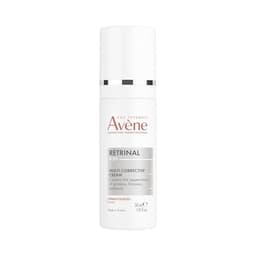
Avene Retrinal 0.05% Anti-Aging Retinaldehyde Cream
The lower rung of the same line at a stated 0.05% — the one to start on if you have never used a retinal, in the identical base.
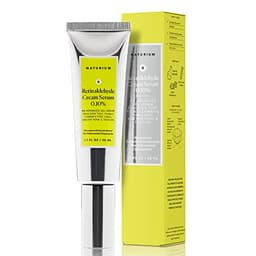
Naturium Retinaldehyde Cream Serum 0.10%
The same stated 0.10% figure in a much larger bottle sized for face, neck and chest, at a fraction of the price per ounce.
Read the full review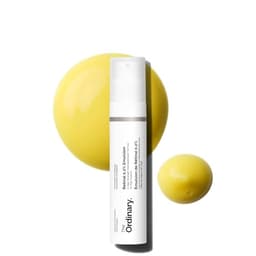
The Ordinary Retinal 0.2% Emulsion
A stated 0.2% retinal for the price of a sandwich, if you are experienced and want the top of the range cheaply.
Read the full review
Frequently asked questions
Is Avene Retrinal 0.1% strong?
For a retinal, yes — it sits toward the upper middle of a category where 0.05% is an entry rung and 0.2% is near the ceiling. Because retinal needs only one enzymatic conversion to retinoic acid where retinol needs two, these small numbers are more potent than they look next to a retinol percentage. Do not read 0.1% as gentle.
Should I start with the 0.05% or the 0.1%?
The 0.05%, unless you already use a retinal comfortably. The whole value of this line is that the two strengths share a base, so moving up changes one variable — a benefit you forfeit by starting at the top. If you have never used a retinaldehyde product at all, start low regardless of your retinol history.
Is retinal better than retinol?
Faster, at comparable irritation, in exchange for cost and instability. Retinal is one conversion step from retinoic acid rather than two, so it acts more directly. It is not a different category of benefit — it is the same retinoid pathway reached more efficiently, which is why the numbers on the label are so much smaller.
Is it worth the price?
It depends what you are buying. If it is the stated figure, a budget retinal states a figure too and costs a fraction. What the premium buys here is a formulated cream base from a brand built around reactive skin, and a matched lower rung to start on. That is a real product, not just branding — but it is a lot of money per milliliter.
Can I switch straight from retinol to this?
You can move to it, but restart your ramp-up. Tolerance is to a specific molecule at a specific dose, and retinal is more potent per unit than retinol. Someone comfortable on a stated 0.5% retinol nightly should still begin at twice a week here, with moisturizer over the top.
How should I store it?
Closed, out of direct light, and away from heat. Retinaldehyde is generally regarded as less stable than retinol, so packaging and storage matter more here than in most of the category. If the cream darkens noticeably or the smell changes, replace it — our shelf-life guide covers the signals.
Is it fragrance-free?
The listing we read did not state it, so our spec table prints 'Not published'. That is an absence of confirmation rather than a finding that it contains fragrance. If confirmed fragrance-free matters to you, our fragrance-free roundup only lists products where a listing says so.
Sources
- Tolerance profile of retinol, retinaldehyde and retinoic acid under maximized and long-term clinical conditions (PubMed) — Retinol and retinaldehyde share a low irritation potential; retinoic acid (tretinoin) is more irritating (accessed July 17, 2026)
- American Academy of Dermatology — Retinoid or retinol? — AAD on the difference between prescription retinoids and OTC retinol (accessed July 17, 2026)
- Human Skin Aging and the Anti-Aging Properties of Retinol (PubMed) — Review of topical retinol's effect on collagen and photoaging (accessed July 17, 2026)
- Moisturizers — StatPearls (NCBI Bookshelf) — Reference on humectants (hyaluronic acid), occlusives and emollients (accessed July 17, 2026)
- The use of retinoids in the treatment of photoaging (PubMed) — Clinical-trial evidence for topical retinoids in photoaging (accessed July 17, 2026)
Keep reading
Best retinal (retinaldehyde) serums
The whole retinal field, compared on stated strength, base and price.
See the picksRetinol vs retinal
Why one conversion step changes the potency, and who each molecule suits.
Compare the twoBest retinol for sensitive skin
Where a pharmacy brand built around reactive skin sits against the wider field.
See the picksMedik8 Crystal Retinal 1, reviewed
The other well-known retinal ladder — and the one that doesn't print its numbers.
Read the review