Kiehl's Micro-Dose Retinol Serum Review
The premise is right: a small dose every night beats a large dose twice a month, because results come from consistency. The premise is also free — and at this price, declining to publish the dose is a harder thing to overlook.
How this is funded: we earn a commission if you buy through our links, at no extra cost to you. It never changes which product we recommend, and we’ll tell you when we’d skip one. Full disclosure.
The premium expression of a genuinely good idea: a small daily dose of retinol, formulated to be used every night from the start rather than ramped up. You pay a lot for the packaging and the brand — but the every-night-from-day-one proposition is the one that actually gets people to stick with retinol.
Strengths
- Built around daily use, which is the habit that actually produces results
- Ceramide and peptide support in the base
- Pump packaging protects the retinol better than a jar
Trade-offs
- By far the highest price per ounce of any face serum we list
- Retinol percentage is not published, at a price where it really should be
| Key active | Retinol + ceramide + peptide |
|---|---|
| Stated concentration | Not published |
| Format | Fluid serum |
| Fragrance-free | Not published |
| Best for | People who would rather pay more than manage a ramp-up schedule |
Formulation note. Sold as a low-dose daily retinol rather than a high-strength weekly one. The premise is that a smaller amount used every night beats a larger amount used twice a week — which matches how retinol results actually accumulate. The dose is undisclosed.
Ingredients and claims read from the product listing, on August 11, 2026. “Not published” means the brand does not state that figure.
Most retinol marketing is about strength. This one is about frequency, and that makes it more interesting than the average premium serum, because the underlying claim is one this site broadly agrees with: a small dose used every night beats a large dose used occasionally, because retinoid results accumulate over months and the main cause of failure is stopping.
That is a genuinely good product thesis. The awkwardness is that it is also free. Nothing about the idea requires this particular bottle.
The idea, and why it is right
Retinoid benefits are cumulative. Texture shifts by weeks four to twelve, fine lines over months, firmness over a year — our results timeline guide sets out the checkpoints. What determines whether you reach any of them is whether you are still applying the product, and the most common reason people are not is that the first month hurt.
A low dose used nightly sidesteps that trade. You get the same total exposure over a month as a higher dose used twice a week, with far less of the peak irritation that ends people’s attempts. It also removes the schedule — there is no ramp-up to manage, no counting nights, no decision to make on a Tuesday.
For a certain buyer, removing that management overhead is worth real money. It is the same argument our men’s roundup makes about one-step products, and it is more defensible than most premium-skincare reasoning.
The problem: you cannot see the dose
“Micro-dose” is a description, not a number. Kiehl’s does not publish the retinol concentration, so our spec table prints Not published— the same thing it prints for CeraVe, RoC, Neutrogena and Olay.
At drugstore prices we treat that as an annoyance and rank the product on its formulation. At this price it is harder to shrug off, because the entire proposition rests on the dose being small enough for daily use, and you are being asked to take that on trust. If the product’s central claim is about dose, publishing the dose is not an unreasonable expectation.
There is a second consequence. Without a figure, you cannot plan a step up. Get comfortable here, want more, and you are back to guessing — whereas a stated 0.2% tells you exactly what the next rung looks like. Our strength guide covers why that matters more than most buyers expect.
The formula and the packaging
Retinol supported by ceramides and peptides, which is a sensible pairing for a product intended for nightly use — barrier support alongside a retinoid is what keeps a daily schedule comfortable. Our peptides comparison is honest about how much the peptide half is likely contributing, which is: something, less than the marketing implies.
The packaging deserves credit. A pump keeps light and air away from the remaining product in a way a jar cannot and a dropper does not fully manage, and retinol degrades on exposure to both. Our shelf-life guide ranks the formats, and this one is near the top. For a premium product that is the right choice, and plenty of expensive skincare gets it wrong.
The texture is a fluid serum that layers cleanly. Fragrance status is not stated on the listing we read, so we record it as unknown rather than assuming.
Who it suits
People who would genuinely rather pay more than manage a schedule. That is not a frivolous position — a routine you follow beats an optimal one you do not, and if removing the ramp-up is what gets you through twelve months, the product has earned its price for you specifically.
It also suits people who want a formulated experience rather than a bare active: the ceramide and peptide support, the pump, and a texture designed to be pleasant every night. And it suits anyone already inside the brand who wants a retinoid that fits their existing routine.
Who should skip it
Anyone who wants to know what they are applying. That is most of this site’s readers, and the cheaper stated-strength options are genuinely better on the axis that matters here.
Anyone on a budget, obviously — this is the most expensive face serum per ounce we list, and our drugstore roundup covers products that do the same job for a tenth of it.
And anyone who wants to progress deliberately. Without a published number, this is a comfortable place to stay rather than a rung to climb from. Experienced users looking for more should be on our high-strength roundup instead.
How to use it
At night, on clean and completely dry skin, one pump for the whole face. Despite the daily-use framing we would still start at two or three nights a week for a fortnight, then move to nightly if it is comfortable — you cannot see the dose, so let your skin tell you rather than the box. Our frequency guide has the schedule.
Moisturizer over the top, no acids or strong vitamin C in the same routine while you are adjusting, and broad-spectrum sunscreen every morning. Keep the pump closed and out of direct light — good packaging helps, but it does not survive a sunny windowsill.
The verdict
A good idea, well packaged, priced like a luxury and quiet about the one figure its argument depends on. If the daily-use proposition is what finally makes a retinoid stick for you, it is defensible — adherence really is the variable that decides results.
For most people, though, the same strategy is available for a fraction of the money with the number printed on the label. Buy this if the experience is what you are paying for. Buy a stated low strength if the retinol is.
General guidance, not medical advice. Retinol Room is written by an enthusiast, not a dermatologist. For a diagnosis, a reaction, or a prescription active like tretinoin, see a qualified professional. Introduce any new active slowly and patch-test first.
If it’s not the one, consider these
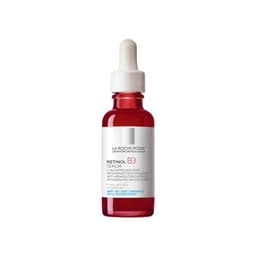
La Roche-Posay Pure Retinol Face Serum (B3 + HA)
Pure retinol with niacinamide and hyaluronic acid buffering built in, from a pharmacy brand, at a considerably lower price per ounce.
$44.99 · View on AmazonRead the full reviewPrice as of October 4, 2026. #ad How we’re funded
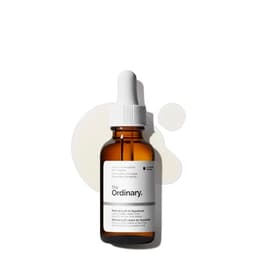
The Ordinary Retinol 0.2% in Squalane
If micro-dosing is the appeal, a stated 0.2% is the same idea with the number printed on the label, for a fraction of the money.
$8.10 · View on AmazonPrice as of October 4, 2026. #ad How we’re funded
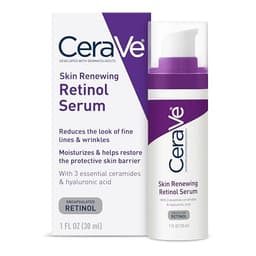
CeraVe Retinol Serum with Niacinamide & Hyaluronic Acid
Retinol with niacinamide and ceramides in a fragrance-free serum — the drugstore version of the same supported-formula argument.
Read the full review
Frequently asked questions
What does 'micro-dose' mean?
It is a marketing description of a formulation approach — a low retinol concentration intended for nightly use rather than a higher one used intermittently. It is not a measured figure, and Kiehl's does not publish the concentration, so our spec table prints 'Not published'.
Is micro-dosing retinol actually better?
The underlying idea is sound: retinoid results accumulate over months of consistent use, and the biggest cause of failure is stopping. A dose you can use every night from the start beats a stronger one you abandon. What the idea does not require is a specific expensive product — a stated low-strength retinol used nightly is the same strategy.
Can I really use it every night from the start?
That is the pitch, and for many people it will be fine. We would still build up rather than starting nightly, because you cannot see the dose and because 'formulated for daily use' is the brand's claim rather than a property of your skin. Two nights a week for a fortnight costs you almost nothing and tells you where you stand.
Is it worth the price?
It is the highest price per ounce of any face serum on this site. What you get is a supported formula with ceramides and peptides, pump packaging that protects an unstable active, and a coherent daily-use proposition. What you do not get is a published concentration, which at this price is the part that grates.
Does it contain fragrance?
The listing we read did not state fragrance-free status, so our spec table prints 'Not published'. That is an absence of confirmation rather than a finding either way. Our fragrance-free roundup lists only products where a listing confirms it.
How does the packaging compare?
Well. A pump keeps light and air away from the reservoir far better than a jar or a dropper does, which matters for a molecule that degrades on exposure to both. Our shelf-life guide ranks the formats — pumps sit near the top, jars at the bottom.
Is this a good first retinol?
It is a reasonable one and an expensive one. The daily-use framing genuinely suits beginners, but so does a stated 0.2% at a tenth of the price — and with a beginner product, knowing the number is worth more than the ceramides. Our beginner roundup covers the cheaper routes to the same result.
Sources
- American Academy of Dermatology — Retinoid or retinol? — AAD on the difference between prescription retinoids and OTC retinol (accessed July 17, 2026)
- Human Skin Aging and the Anti-Aging Properties of Retinol (PubMed) — Review of topical retinol's effect on collagen and photoaging (accessed July 17, 2026)
- Mechanistic Basis and Clinical Evidence for Nicotinamide (Niacinamide) in Skin (PMC) — Review of niacinamide's barrier, ceramide and pigmentation effects (accessed July 17, 2026)
- Moisturizers — StatPearls (NCBI Bookshelf) — Reference on humectants (hyaluronic acid), occlusives and emollients (accessed July 17, 2026)
- Cosmeceuticals in photoaging: A review (PMC) — Comparative review of retinoids, peptides, antioxidants and growth factors for photoaged skin (accessed August 11, 2026)
Keep reading
How often to use retinol
The schedule this product is built around — and how to get there without paying for it.
Read the guideRetinol strength & percentage guide
Why 'micro-dose' is a marketing term rather than a number, and what to look for instead.
Decode the labelsBest retinol for sensitive skin
Where a low-dose daily product sits against formulas built for reactivity.
See the picksBest retinol for beginners
The wider first-bottle field, including several that publish their strength.
See the picks