Retinol While Breastfeeding
The avoid-list everyone quotes is a pregnancy list. What the dermatologists' own association actually publishes about breastfeeding is a single sentence telling you to ask your dermatologist — and that gap is the honest answer to this question.
Ask the clinician who knows your history, and do not let anybody — including us — substitute a web page for that conversation. That is the honest answer, and the rest of this page explains why it is the honest answer rather than a dodge: the authorities that publish clear guidance on retinol in pregnancy do not publish equivalent guidance for breastfeeding, and the confident answers you will find online are filling that silence with inference.
Here is the specific finding, because it is checkable. The AAD’s own dermatologist-approved pregnancy skin care page — the page that doeslist retinoids among the products to avoid, naming isotretinoin, tretinoin, tazarotene and over-the-counter retinol — mentions breastfeeding exactly once. Not in a recommendation. In a sentence telling you to tell your dermatologist all the medications and prescription skin care you use, so that they can help update your treatment plan during pregnancy and breastfeeding, if necessary.
That is a referral, not a rule. The dermatologists’ own association, on its own page about this exact life stage, answers the nursing question by pointing you at a dermatologist.
Why the pregnancy answer does not simply carry over
The two questions share an ingredient and almost nothing else.
The pregnancy concern about retinoids is about development in a fetus, and the reason it is treated so firmly is that the consequences of being wrong are severe and irreversible. The AAD’s acne-in-pregnancy guidance says most experts recommend stopping tretinoin and adapalene during pregnancy, and that azelaic acid is thought to be safe.
The nursing question is a different chain: how much of a topical retinoid crosses into your bloodstream, how much of that appears in milk, and what quantity would need to be there to matter to an infant. Those are separate links, each with its own evidence, and a firm answer at the first stage of life does not automatically produce the same answer at the second.
It does not produce the opposite answer either, and this is where a lot of online advice goes wrong in the reassuring direction. “Topicals barely absorb, so it is fine” is an argument, not a finding, and it is the same shape of argument people use to dismiss the pregnancy guidance — which the AAD does not accept.
Why the evidence is structurally thin
The AAD states the reason for pregnancy outright: pregnant women are not enrolled in these studies, so the evidence is indirect. The same structural fact applies to lactation. You cannot ethically run a randomized trial of a cosmetic ingredient on nursing mothers and their infants, so the literature that would settle this does not exist and is not going to.
That means absence of reported harm is not evidence of safety, and absence of a recommendation is not a prohibition. It means the decision gets made by a person who knows your skin, your history and your baby — which is exactly what the AAD’s own sentence sends you to do.
What to ask, so the appointment is useful
Ten minutes of preparation turns “is retinol OK?” into a decision you can actually act on. Worth raising:
- The specific product and form. Prescription tretinoin, an over-the-counter retinol, a retinal, an adapalene gel and a retinyl ester are not one thing, and the answer may differ between them. Take the bottle or a photo of the ingredient list.
- The area and the amount. A pea on the face at night is a different proposition from a retinol body lotion across a large surface. Our dosing guide has the published measure if you want to describe it precisely.
- Skin-to-skin contact.A nursing infant spends a great deal of time against a chest and forearms. Transfer onto an infant’s skin is a practical question that is worth asking about separately from the systemic one.
- What you are treating. Postpartum melasma, acne, or general photoaging are three different problems with three different non-retinoid options, and the alternative that suits you depends on which one you have.
- A timeline.“Not now” is much easier to live with when it comes with a “revisit at” date.
What to do in the meantime
The two steps that do the most work raise none of these questions, and they are the ones most likely to be skipped in the first year of a baby’s life.
Sunscreen, every morning.If postpartum pigment changes are what prompted this search, daily sun protection is doing more for them than any retinoid would, because pigment problems are driven by exposure. The AAD’s dosing guidance is about a teaspoon for the face, reapplied every two hours outdoors — considerably more than most people use.
A plain moisturizer, generously.The AAD’s own advice on choosing one points at ceramides and hyaluronic acid, creams rather than lotions for dry skin, and fragrance-free products. Humectants draw water in, occlusives slow it leaving, emollients supply the lipids. None of that is contentious and all of it improves how skin looks.
The two steps that are not in question
Neither is a retinol, and that is the point of listing them here. The morning sunscreen is the single highest-value step while a retinoid is on hold — particularly for postpartum pigment changes, which are driven by sun exposure. The cream is the bland, fragrance-free, no-actives moisturizer the AAD's own guidance describes, in a tub size that lets you be generous with it.
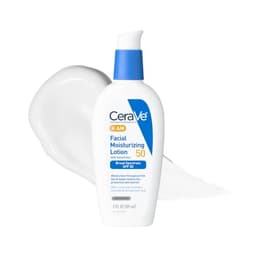
Morning SPF
CeraVe AM Facial Moisturizing Lotion SPF 50, 3 oz
The morning half of a retinol routine, in one step: the moisturizer and the SPF 50 are the same bottle, which is the version people actually keep using. Retinol treats photoaging — without daily sun protection it spends its effort offsetting damage you are still accumulating.
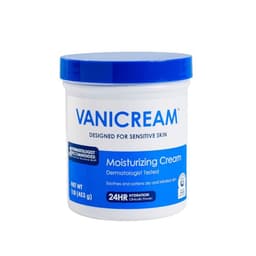
The sandwich layer
Vanicream Moisturizing Cream, 16 oz tub
The dull, no-actives cream the sandwich method asks for — the listing's own pitch is that it is formulated without common irritants, which is the whole specification here. The tub size is the point: buffering only works if you are generous with it.
None of these are retinols — they are the supporting products this page already recommends, listed so you can act on the advice. Product images supplied by Amazon; prices are live and dated on each button.
The alternatives, honestly
The AAD’s pregnancy page suggests vitamin C and glycolic acid in place of retinoids, and names azelaic acid as thought to be safe for acne in pregnancy. Those are reasonable things to take to your appointment rather than conclusions to act on alone, because “suggested instead of a retinoid in pregnancy” is not the same statement as “cleared for use while nursing.”
Bakuchiol will come up, because it comes up every time. Our retinol vs bakuchiol comparison sets out exactly how far the published comparison goes, and it is a shorter distance than the marketing implies. In particular, being plant-derived is not a safety claim, and the pregnancy-and-nursing evidence for bakuchiol is thinner than for retinol, not thicker. Our retinol alternatives page goes through the rest.
Coming back to it afterwards
When you and your clinician are happy to restart, restart as a beginner. A year without a retinoid means your skin is not retinized, whatever schedule you were on before, and picking up at four nights a week with a 1% serum is how people turn a fresh start into a fortnight of flaking. Two nights a week, a pea for the whole face, moisturizer over the top, and build. Our beginner guide and starter picks are written for exactly that restart, and when to start retinol covers the timing question underneath it.
One closing note on what this page deliberately does not do. We have not recommended a retinol product here, and that is not an oversight — there is no honest way to put a buy button under an open medical question. Every other page on this site ranks products. This one ranks a conversation.
General guidance, not medical advice. Retinol Room is written by an enthusiast, not a dermatologist. For a diagnosis, a reaction, or a prescription active like tretinoin, see a qualified professional. Introduce any new active slowly and patch-test first.
Frequently asked questions
Can you use retinol while breastfeeding?
This is a question for the clinician who knows your history, and we are not going to pretend otherwise. The AAD's own pregnancy skin care page mentions breastfeeding exactly once, and only to say that telling your dermatologist what you use lets them update your treatment plan during pregnancy and breastfeeding if necessary. It publishes no retinol-while-nursing recommendation either way.
Is the pregnancy advice the same as the breastfeeding advice?
They are different questions, and treating them as one is the error this page exists to correct. The pregnancy concern is about a developing fetus; the nursing question is about how much of a topical reaches your bloodstream, how much of that reaches milk, and what it would do there. Caution in pregnancy does not automatically mean the same answer afterwards — and it does not mean the opposite either.
What does the AAD say about retinol in pregnancy?
It lists retinoids among the products to avoid during pregnancy, naming isotretinoin, tretinoin, tazarotene and over-the-counter retinol, and suggests vitamin C and glycolic acid instead. On acne specifically it says most experts recommend stopping tretinoin and adapalene during pregnancy and that azelaic acid is thought to be safe.
Why is the evidence so thin?
Because of how the studies are built. The AAD states it plainly for pregnancy: pregnant women are not enrolled in these studies, so the evidence is indirect. The same structural reason applies to nursing. Nobody runs a randomized trial of a cosmetic on breastfeeding mothers, so an absence of findings is not a finding of safety in either direction.
What can I use instead while I am nursing?
Start with the two steps that do the most and raise the fewest questions: daily sunscreen and a plain moisturizer. The AAD's own pregnancy page suggests vitamin C and glycolic acid in place of retinoids, which is a reasonable place to take to your clinician. Our retinol alternatives page covers the non-retinoid options and is honest about the evidence behind each.
I used my retinol before I thought about this. What now?
Stop worrying and start asking. Bring it up at your next appointment or call the practice — that is a far better use of the next ten minutes than reading forum threads. Our pregnancy page handles the equivalent 'I used it before I knew' question, and the answer there is the same in shape: get it in front of someone who knows your history rather than deciding alone.
Does it matter where on my body I apply it?
It is worth raising with your clinician, because it is a practical question rather than a pharmacological one. A nursing infant has prolonged skin-to-skin contact with a chest and arms, and a retinoid is a product you would not want transferred onto an infant's skin regardless of what the systemic picture turns out to be. That is a reason to ask specifically about area and timing, not just about the ingredient.
When can I start retinol again after breastfeeding?
Once you and your clinician are satisfied it is appropriate — and then as a beginner rather than where you left off. Skin that has not seen a retinoid for a year is not retinized, whatever your pre-pregnancy schedule was. Two nights a week, a pea for the whole face, moisturizer over the top, and build from there.
Sources
- American Academy of Dermatology — Dermatologist-approved pregnancy skin care — AAD lists retinoids among the products to avoid during pregnancy, naming isotretinoin, tretinoin, tazarotene and over-the-counter retinol, and suggests vitamin C and glycolic acid instead (accessed August 19, 2026)
- American Academy of Dermatology — Is any acne treatment safe to use during pregnancy? — AAD states most experts recommend stopping tretinoin and adapalene during pregnancy, and that azelaic acid is thought to be safe; it also notes pregnant women are not enrolled in these studies, so the evidence is indirect (accessed August 19, 2026)
- American Academy of Dermatology — Retinoid or retinol? — AAD on the difference between prescription retinoids and OTC retinol (accessed July 17, 2026)
- American Academy of Dermatology — How to apply sunscreen — AAD on how much sunscreen to use (about a teaspoon for the face) and reapplying every two hours (accessed August 11, 2026)
- American Academy of Dermatology — How to pick the right moisturizer for your skin — AAD guidance by skin type, including the dermatologist quoted on the page saying 'I tell some people never put moisturizer on the center of your face' — the published statement of the zone-by-zone approach combination skin needs. It also names ceramides and hyaluronic acid as ingredients to look for, recommends creams or ointments over lotions for dry skin and a lighter gel for oily skin, and advises fragrance-free products labeled non-comedogenic (accessed September 18, 2026)
- Moisturizers — StatPearls (NCBI Bookshelf) — Reference on humectants (hyaluronic acid), occlusives and emollients (accessed July 17, 2026)
Keep reading
Retinol during pregnancy
The question this one gets confused with — why the guidance is to stop, and what the AAD suggests instead.
Read the guideRetinol alternatives
The non-retinoid options and the honest state of the evidence behind each one.
Compare the optionsRetinol vs bakuchiol
The most-recommended substitute, and exactly how far the published comparison actually goes.
Compare the twoWhen to start retinol
The question to come back to afterwards, including why restarting means starting again.
Read the guideRetinol safety
The wider set of situations where a retinoid is the wrong product, and the ones where the worry is misplaced.
Read the guideRetinol for beginners
The schedule to come back on when you do restart — because a year off resets the ramp.
Read the guide